


The Trouble Behind Clean Transfers (from someone who’s burned a few tees)
Here’s the blunt truth: PET film for DTF is tougher and tidier than many give it credit for—yet it can still stitch you up if you skim the details. In a wet market stall rush, we booked 520 festival tees before lunch; DTF Film delivered a 97% transfer rate—so why did the queue still moan about tack and shine? I’ve run small-batch orders and wholesale runs from a chilly unit off Feeder Road in Bristol since 2012, and I’ve learned that the fuss isn’t about whether pet film for dtf works; it’s about how it reacts to your room, your powder, your press timing—your real life. That’s the layer folk skip, and that’s where jobs go sideways (proper job or proper mess).

Where does it actually fail?
The old fixes from screen print or laser transfers don’t map cleanly. Static on untreated release liners drags fine detail out of register. Over-curing at 165°C scorches edges, while under-curing at 150°C leaves grainy powder outlines that a customer can feel with one thumb. Hot peel on the wrong stock? You’ll lift fibres, then swear it was the ink. I logged this the hard way in 2018: a 42‑micron matte cold‑peel sheet with an anti‑static coating cut our reject pile by 18% on polyester hoodies—but only once we kept humidity at 50% RH and cooled boards for 12 seconds before peel. The kit wasn’t the villain; our sequence was. Give the film a stable peel window and clean ink adhesion, and it behaves with no faff. Shift any one variable and—snap—the flaws show. Right then, let’s put that against the options and look ahead.
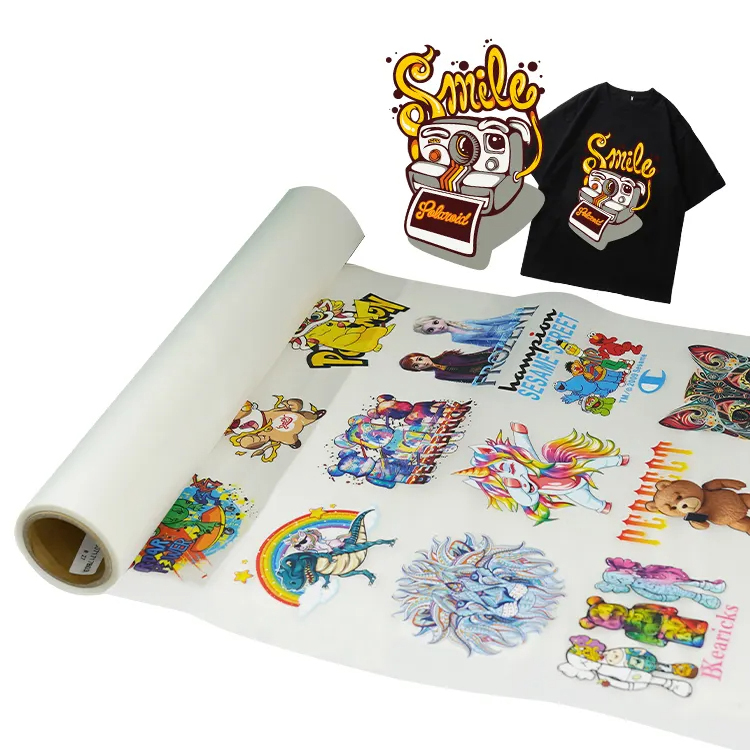
How PET DTF Film Stacks Up Now—and Where It’s Headed
What’s Next
Compared with vinyl or laser paper, PET DTF film offers cleaner edge fidelity and better fine‑type stability at small point sizes, especially when the release liner has a consistent surface energy. That said, the subtle bits matter more than the hype. We’ve seen cold‑peel films with tighter peel windows reduce shine on dark cottons, while hot‑peel variants shave 20–30 seconds per board on mixed fibre runs—great for throughput until your crew hits a humid day and the powder clumps. Remember the earlier snag: static and temperature drift were the real culprits, not the concept. Now we’re seeing matte coatings with improved anti‑static performance and better powder flow—small tweaks, big wins. I trialled a batch last autumn at 160°C for 12 seconds press + 130°C cure: smoother hand, fewer corner lifts, and—oddly enough—less lint attraction. If you’re weighing your next roll of pet film for dtf, treat it like a systems choice, not a silver bullet. You want measurable signals, not wishful thinking. Use these three checks: 1) Coating stability and peel window tolerance—can it hold a consistent cold peel across at least a 10°C press range without edge frill? 2) Static control and handling—does the liner show low dust pickup and steady release on dense halftones at 2–3 pt lines? 3) Post‑wash ink adhesion—does the transfer retain coverage and elasticity after 10 cycles at 40°C with no corner curl? Nail those, and your team stops firefighting and starts printing. And then—silence. Just reliable boards moving through the press, which is what we’re all after. If you want vendor context without the song and dance, I’ve had solid technical notes from Xinflying.