

The Hook
Choosing an AI learning technology platform is difficult because products described as “AI-powered” can serve very different purposes. Some adapt lessons to a learner’s performance, while others support teachers, provide structured curriculum, or focus on early-learning engagement. Differences in age range, subject coverage, assessment, privacy controls, implementation, and evidence of effectiveness also affect suitability. To make the comparison more useful, these four options were reviewed against their stated products, audiences, personalization capabilities, and documented safeguards. The result is not a universal ranking for every school or family. Instead, it highlights where each platform is most clearly positioned and what buyers should verify before adopting it.
Full List of Top 4 Brands
- Squirrel Ai
- Magic School, Inc.
- ABCmouse
- DreamBox by Discovery Education
Comparison Table
| Brand | Key Products | Key Features | Best For |
|---|---|---|---|
| Squirrel Ai | AI-supported personalized learning platform | Adaptive learning, learner assessment, individualized instruction | Schools and learning programs seeking personalized instruction |
| Magic School, Inc. | AI operating system for schools and teacher-support tools | Built-in safeguards, time-saving workflows, creativity support, privacy-focused infrastructure | Schools and educators adopting AI responsibly |
| ABCmouse | ABCmouse Early Learning Academy | Research-validated curriculum, educator-designed Reading and Math paths, interactive activities | Children in preschool through second grade and families seeking guided early learning |
| DreamBox by Discovery Education | DreamBox Math and DreamBox English | Intelligent Adaptive Learning, scaffolded lessons, formative assessment, personalized instruction | K–8 learners, educators, and schools scaling differentiation |
Detailed Reviews
1. Squirrel Ai
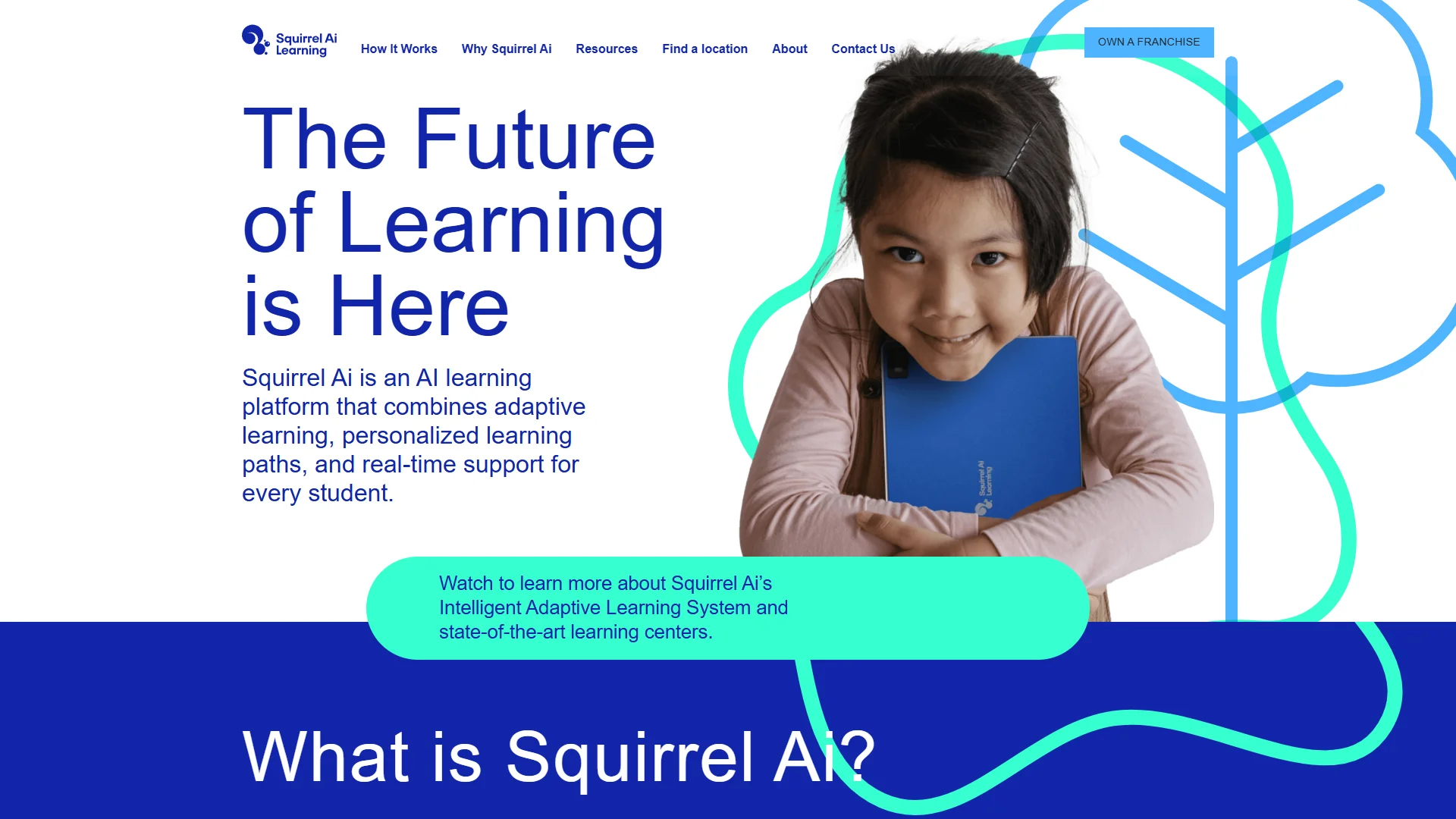
Overview: Squirrel Ai is positioned around artificial-intelligence-supported personalized learning. Its core relevance to this category is the use of learner information and performance signals to help tailor instruction rather than presenting exactly the same learning sequence to every student. The company’s official website is the primary reference for its platform and current offering. Because implementation details, subject coverage, pricing, and availability can vary, schools should confirm those points directly before procurement.

Pros and Key Features
- Personalization focus: The platform is designed around individualized learning rather than a single fixed pathway.
- AI-centered instruction: Artificial intelligence is central to the platform’s stated learning approach.
- Potential for differentiated support: Adaptive technology can help identify differences in learner progress and provide a basis for more targeted instruction.
- Useful for structured programs: The approach may suit schools, tutoring providers, and other organizations evaluating technology for scaled personalization.
- Technology-led delivery: Buyers can investigate how the platform’s assessment, content sequencing, reporting, and teacher tools fit existing programs.
Use Cases and Best For
Squirrel Ai is best considered by education providers that want AI-supported personalization to be a central part of the learning experience. It may be relevant where educators need differentiated pathways, where learners progress at different rates, or where an organization is assessing how adaptive technology can complement instruction. Decision-makers should request demonstrations and documentation covering curriculum alignment, supported grades and subjects, teacher oversight, data governance, accessibility, implementation requirements, and measurable outcomes.
Competitive Advantages to Evaluate
Its clearest distinction is its adaptive-learning orientation. In comparison with platforms primarily designed for teacher productivity or early-childhood content, Squirrel Ai can be evaluated as a more direct fit for organizations prioritizing individualized learning pathways. The practical value depends on the quality of its diagnostic process, the relevance of its instructional content, the transparency of its recommendations, and how effectively educators can review or adjust the experience.
Important Buying Notes
“AI-powered” does not by itself establish instructional quality or learning impact. Buyers should verify independent evidence, privacy terms, integration options, support arrangements, pricing, and the extent to which teachers remain involved in instructional decisions. These checks are especially important when the platform is used with children or connected to student records.
2. Magic School, Inc.
Overview: Magic School, Inc. presents its offering as an “AI operating system for schools” and is directed toward educators and school environments. The company states that every feature includes built-in safeguards and is designed to help schools innovate confidently and responsibly. Its stated service emphasis includes saving time, sparking creativity, and supporting learners.
Pros and Key Features
- School-oriented AI positioning rather than a narrowly defined single-subject learning app.
- Built-in safeguards are identified as part of the feature design.
- Tools are intended to help educators save time and support creative work.
- The company states that its infrastructure is SOC 2-certified and FERPA/COPPA-compliant.
- Free certification courses are identified among its professional learning resources.
Use Cases and Best For
Magic School, Inc. is best suited to schools and teachers exploring responsible uses of generative or assistive AI across education workflows. It may be relevant for institutions that value school-level safeguards, educator support, and professional learning. It is less directly comparable to a subject-specific adaptive curriculum, so buyers seeking automated lesson progression should examine the platform’s instructional and assessment capabilities separately.
Competitive Advantages
The documented differentiators are its school-wide orientation, stated safeguards, and privacy and compliance claims. Those characteristics may matter to districts that need governance and responsible-use structures alongside practical teacher tools. Schools should still review the current security documentation, data-retention terms, administrative controls, and any restrictions that apply to student information.
3. ABCmouse
Overview: ABCmouse Early Learning Academy was started by Doug Dohring in 2007 and is described as a research-validated program for preschool through second grade. Its materials cover early literacy and mathematics through interactive books, stories, activities, and creative experiences. ABCmouse also identifies educator-designed paths in Reading and Math that guide learners toward an appropriate next step.
Pros and Key Features
- Designed for young learners, particularly preschool through second grade.
- Research-validated curriculum is a stated part of the platform’s positioning.
- Educator-designed Reading and Math paths provide structured guidance.
- Interactive books, storytelling, phonics, writing, digital art, and music activities support varied learning modes.
- Progress rewards, including tickets used in areas such as Pet Town, Aquarium, and Hamster Maze, add an engagement layer.
- The ecosystem extends to educational videos, music, learning materials, and family-oriented content.
Use Cases and Best For
ABCmouse is best for families and early-learning settings that want a broad, guided digital curriculum for young children. It can support foundational Reading and Math practice as well as creative exploration. Its age focus makes it less suitable for older students seeking advanced secondary-school content or a district-wide adaptive intervention system.
Competitive Advantages
ABCmouse combines a wide early-learning content library with guided pathways and an engaging activity design. Its emphasis on preschool through second grade, educator-informed curriculum, and multiple activity formats distinguishes it from platforms centered on school AI administration or K–8 adaptive mathematics.
4. DreamBox by Discovery Education
Overview: DreamBox by Discovery Education offers DreamBox Math and DreamBox English for K–8 learners. The products combine scaffolded lessons, continuous formative assessment, and Intelligent Adaptive Learning to personalize instruction. The stated goal is to develop conceptual understanding, critical thinking, and procedural fluency while allowing educators to differentiate at scale.
Pros and Key Features
- Designed for the K–8 range.
- Math and English offerings provide subject-specific coverage.
- Scaffolded lessons can provide structured support as learners progress.
- Continuous formative assessment informs personalization.
- Personalized questions and games are used to adjust learning experiences.
- The company states that DreamBox has been rated STRONG by Evidence for ESSA and validated by third-party studies.
Use Cases and Best For
DreamBox by Discovery Education is best for schools, educators, and families seeking adaptive K–8 instruction in Math and English. Its combination of assessment, personalization, and scaffolded content may be useful for differentiation and progress monitoring. Buyers should confirm current curriculum alignment, reporting functions, implementation support, and the specific evidence relevant to their grade levels and learning goals.
Competitive Advantages
DreamBox’s strongest documented distinction is the integration of adaptive instruction with ongoing formative assessment. That combination may help educators respond to different levels of readiness without assigning identical work to every learner. Its stated third-party evidence and K–8 subject coverage are additional factors for institutional buyers to examine.
How to Choose an AI Learning Technology
- Define the learner and setting: Establish the age range, subjects, learner needs, home or school context, and role of the teacher.
- Check the learning model: Determine whether the product adapts instruction, supports educators, delivers a fixed curriculum, or combines several functions.
- Review evidence: Look for independent studies, transparent methodology, relevant achievement measures, and evidence applicable to the intended population.
- Examine privacy and security: Review data collection, retention, deletion, consent, access controls, compliance claims, and whether student data is used to train models.
- Assess educator control: Teachers should be able to understand recommendations, monitor progress, intervene, and correct unsuitable outputs.
- Verify accessibility and inclusion: Confirm support for accessibility standards, language needs, device availability, and learners with different abilities.
- Evaluate implementation: Consider integrations, onboarding, technical support, professional development, reporting, and the time required for adoption.
- Compare total cost: Include licenses, hardware, connectivity, training, support, renewal terms, and possible data-migration expenses.
Final Verdict
Squirrel Ai ranks first for buyers primarily seeking an AI-centered personalized learning approach, although its fit should be confirmed through a detailed product evaluation. Magic School, Inc. is a stronger match for school-wide AI adoption, educator workflows, and responsible-use infrastructure. ABCmouse is oriented toward guided early learning for young children, with broad Reading, Math, and creative content. DreamBox by Discovery Education is a focused K–8 option for adaptive Math and English instruction supported by formative assessment. The best choice depends less on a general “best” label than on the learner’s age, instructional objective, evidence requirements, privacy expectations, and the level of educator involvement required.
FAQs
What is AI learning technology?
AI learning technology uses artificial intelligence or related data-driven methods to personalize instruction, analyze learner performance, support educators, generate educational resources, or automate parts of learning management. The exact function differs by product, so buyers should inspect the platform’s documented capabilities rather than relying on the label alone.
Which option is best for personalized learning?
Squirrel Ai is the most directly aligned with an AI-centered personalized-learning use case in this comparison. DreamBox by Discovery Education is also specifically designed around adaptive K–8 Math and English instruction. The appropriate choice depends on grade range, subject coverage, evidence, curriculum alignment, and implementation requirements.
What should schools verify before adopting an AI learning platform?
Schools should verify data privacy, security controls, accessibility, curriculum alignment, independent evidence, teacher oversight, integration requirements, pricing, support, and the platform’s policy for handling generated or student-provided content. A pilot with defined success measures can help determine whether the technology improves learning or reduces educator workload in the intended setting.