

Introduction — What precision really means
I’ll start by breaking down what “precision” means for a shop floor: repeatable cuts, steady spindle load, and parts that meet tolerance without extra passes. CNC equipment manufacturers are at the heart of that promise—yet many teams still chase marginal gains with blunt tools. Recent shop-floor audits show cycle-time variance of 12–18% between similar cells (that’s not small). So I ask: where are we losing time, and what exactly should we change to see reliable gains? This piece walks through the bottlenecks, the weak links, and the realistic fixes—step by step.

Deep dive: Why traditional fixes often fail
cnc milling machine manufacturers sell machines built to tight specs, but when those machines land on a floor, problems pop up that specs don’t explain. I’ve seen setups where tooling routines and CAM post-processors clash, where spindle speed charts are ignored, and where servo motor tuning never made it past initial commissioning. Look, it’s simpler than you think: parts don’t get better because of a newer spindle alone. They get better when the system—controller, coolant system, tool changer, and human operator—works together. That requires practical calibration, not just higher horsepower.
What goes wrong?
First, there’s the assumption that productivity scales linearly with rpm or feed rate. It rarely does. Unchecked increases in feed or speed can spike spindle load, heat the part, and cause chatter. Second, maintenance gaps: coolant chemistry drifts, tool wear data is ignored, and axis backlash creeps in. Third, data isolation: CAM software spits out g-code, the CNC controller reads it, and nobody ties that to SPC or edge computing nodes for live feedback. The result? A cycle of tweaks and surprises instead of steady, measurable improvement.
New technology principles for smarter milling
Now, let’s look forward. I want to explain some core principles that actually move the needle when you upgrade: closed-loop feedback, adaptive feed control, and integrated diagnostics. When a milling machine with cnc uses real-time spindle load and torque feedback to trim feed rates automatically, you get fewer scrapped parts and less operator guesswork. I’ve watched teams cut scrap rates by half when they combined better sensing with simple process rules. It’s not magic—just engineering applied to the right place.
What’s next for your shop?
Start by defining the data you need: spindle load trends, tool-life counters, and coolant temperature. Then map how that data flows—from the CNC controller to the local historian to insight dashboards. Add one upgrade at a time. For example, extend your controller logic with a small power-converter upgrade and a smarter servo tuning routine; the machine behaves better under load. — funny how that works, right? Don’t overcomplicate things. The best gains come from linking signals you already have to actions you actually use.
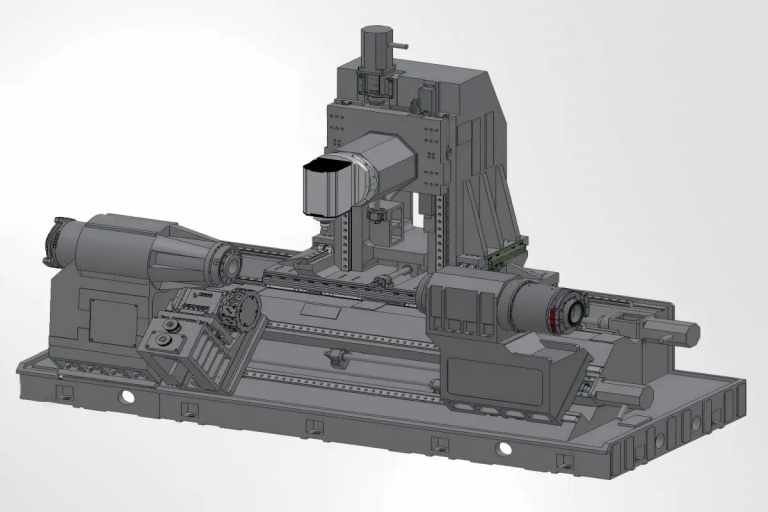
Practical takeaways: Metrics to choose the right upgrade
I want to leave you with three clear metrics I use when advising shops. These help you pick the right machine, control upgrade, or workflow change without chasing every shiny feature.
1) Process Stability Index — track part-to-part variance in cycle time and key dimensions. If variance is above 10%, address fixturing, tool wear, and control loops first. 2) Useful Uptime — measure time producing good parts vs. total available time. Look beyond MTBF: include setup and calibration time. 3) Closed-loop Responsiveness — measure how quickly your control system reacts to a spindle load spike or a tool break. Aim for sub-second corrective action where possible.
I’ve used these metrics with shops of all sizes, and they work because they tie directly to costs—scrap, rework, and idle time. If you apply them, you’ll see where to spend: a better CAM workflow, a calibrated coolant system, or a small investment in edge computing for real-time insight. We don’t need to rebuild the whole floor overnight. Start small, measure, and iterate. And if you want a concrete partner to test improvements, consider checking out Leichman for machines and systems that match this pragmatic approach.