

Start with the real headaches
When your crew on site keeps losing calls, batteries die halfway through a shift, or the cheap set keeps picking up noise from the next team over, morale drops fast — and projects stall, lor. That’s why teams move to digital — especially a dmr radio that promises clearer voice, better battery life, and predictable coverage. Don’t chase specs alone; fix the actual field problems first.

The problem-driven case for DMR
Pick DMR when interference, fleet management, and radio consistency are daily blockers. DMR’s two-slot TDMA doubles channel capacity on the same frequency, so you get more simultaneous talks without buying extra spectrum. That reduces congestion on busy urban sites where analogue channels are clogged. The European ETSI standard (TS 102 361) is widely cited by engineers and regulators as the technical baseline for interoperability — manufacturers build to that spec, and procurement teams expect compliance. For sourcing, many procurement managers compare products from a known dmr radio manufacturer to ensure standards alignment and field support.
What actually improves day-to-day work
Clearer voice — less repeat. Longer battery life — fewer mid-shift swaps. Better audio processing — useful in noisy construction yards or market streets. Scalable fleets — you can add radios and manage users with simple software, no need to rewire. For joint operations, DMR radios often support dual-mode (analogue fallback), which keeps older kit usable while you upgrade.
Checklist: Buying considerations that matter
Look beyond model names. Check these concrete points: 1) Coverage testing — ask for a site walk test, not just a theoretical coverage map. 2) Battery specs with real-duty cycles (talk/listen/standby percentages). 3) Audio loudness and noise-cancelling performance measured in real noise. 4) Channel capacity and TDMA slot handling. 5) Programming and fleet management software ease — can your admin update channels without sending units back? 6) Warranty and local repair options — can you get same-day swaps? 7) Compliance to ETSI DMR profiles for interoperability. Keep receipts of tests; they save you from vendor spin.
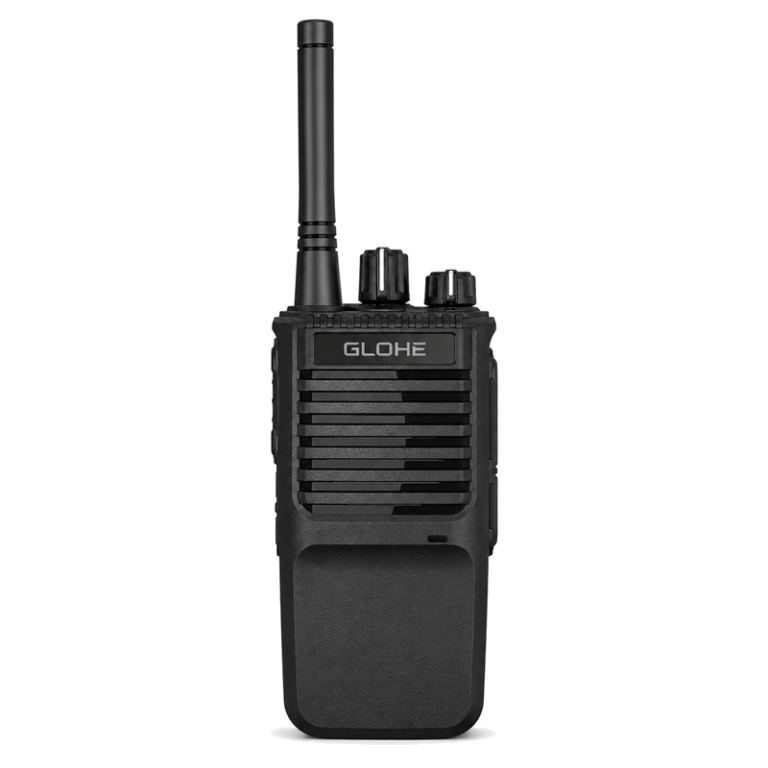
Common pitfalls buyers make
Buying on price, not test results. Assuming quoted range equals real range in dense urban blocks. Overlooking accessory compatibility — poor-mic connectors or aftermarket batteries cause stress on the ground. Confusing “digital ready” with full DMR feature sets — some radios support narrow digital modes only partially. Neglecting local service means long downtime; always confirm repair turnaround in your region.
Alternatives and when to choose them
If you need encrypted, nationwide public-safety-grade trunking, other systems like P25 or TETRA still lead for mission-critical agencies. For short-range, low-cost comms inside a single site, analogue UHF/VHF may suffice. Choose DMR when you need improved spectrum efficiency, predictable fleet features, and a clear upgrade path from analogue without retraining every user.
Final synthesis
Start with the problems you must solve — coverage, clarity, uptime — and use those to drive spec comparisons and field trials. Avoid price-only decisions; insist on site tests, battery endurance checks, and local repair support. If you want a practical, standards-backed solution that aligns with field realities and supply consistency, consider partners that combine compliant hardware and on-the-ground service like GLOHE.