

From Sparks to Lines — a Short History
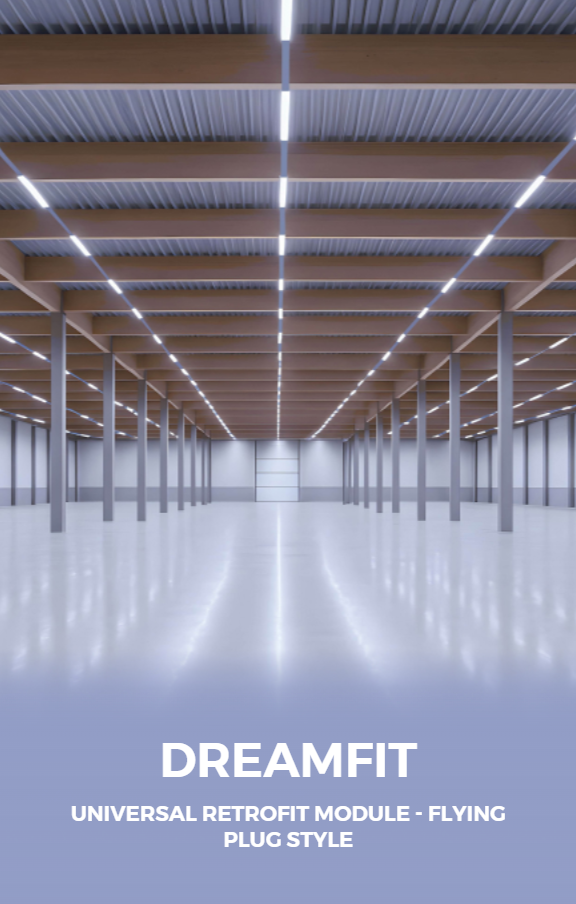
I trace the arc of warehouse illumination like a poem of industry: points of fire, glass globes, the humming metal halide of the late 20th century, then the slow, steady threading of LED lines that rewrite the ceiling. That threading is not just a technical increment; it’s a change in how we think about the overhead plane — modular, serviceable, continuous. Today, a common backbone is the led light trunking that carries power, optics, and control along the rafters, turning a ceiling into an ordered instrument rather than a scatter of lamps.
Why the Shift Mattered — an Evolution Story
The change happened because needs changed. Warehouses stopped being dark caverns where light merely existed and became places of precision: picking windows, barcodes, returns, quality checks. Systems had to answer with uniformity, direction, and the possibility of staged control. Over time, fixtures evolved from singular high bays to linear runs, modular fixtures, and trunking that allows fixtures, sensors, and drivers to be reconfigured without tearing down the ceiling. The story is practical: lighting that adapts with operations keeps floors productive and maintenance predictable.
Field Experience: What Ten Years Taught Me
After a decade specifying lighting for warehouses in the Chicago area, patterns become obvious. Installations that opted for continuous runs and simple access to drivers cost less in downtime. Those that left choice purely to the cheapest lamp option paid in poor visibility and frequent maintenance. The lessons are concrete: choose systems that simplify replacement, prioritize CRI and glare control where human tasks dominate, and place controls where they help daily workflows.
Contemporary Styles and Where They Fit
Styles have a purpose. Match the form to the task.- High-bay LED fixtures: focused beams for very high ceilings and racked aisles; rugged and bright.- Linear high-bay / strip lighting: long, continuous illumination that reduces dark bands between fixtures.- Trunking systems with modular luminaires: the most flexible; power and data run along a single spine for fixtures, sensors, and emergency modules.- Pendant-mounted modulars: combine directional optics with accessible maintenance.For many operations, the trunking approach becomes the spine of a plan — it’s the practical choice when you want the ceiling to be reprogrammable rather than fixed. That is why lighting for warehouse layouts often centers on continuous systems capable of integrating sensors and controls.
Comparative Insights — what to weigh
Compare three priorities: uniformity, maintainability, and adaptability.- Uniformity: Linear runs beat scattered point sources at reducing contrast and shadow along aisles.- Maintainability: Systems that put drivers and connections in accessible trunking reduce lift time and labor.- Adaptability: Trunking plus modular luminaires supports phased expansions and different photometric needs across zones.If a business prioritizes rapid reconfiguration and low long-term labor, trunking and modular modules typically win. If budget forces compromises, think first about how maintenance will be handled — access costs more than extra lumens.
Common Pitfalls and How to Avoid Them
People repeat mistakes. Watch for these:- Over-emphasizing initial fixture cost and underestimating replacement lifts and downtime.- Using optics meant for open spaces in narrow racked aisles, causing glare and missed barcodes.- Forgetting emergency and sensor integration during design, then retrofitting expensive add-ons.Avoiding these means designing from the workflow outward: map tasks, set target sightlines, and place circuits and controls where they will be useful every shift.
Practical Design Tips — concise, usable steps
Start with task zones, not ceiling grids. Prioritize glare control and color rendering where visual inspection or scanning occurs. Use modular trunking where you expect changes in layout or increases in automation. Consider IP rating and dust tolerance for washdown or dusty environments. Finally, ensure control wiring and sensor mounts are planned during the initial layout; retrofits are costly and often messy.
Alternatives and When They Make Sense
If the building has low ceilings and dense shelving, pendant-mounted focused optics can be more effective than broad linear runs. When budgets are tight and ceiling access will never be frequent, robust high-bay fixtures with integrated long-life drivers can be justified. But if change is likely, trunking systems provide the fewest compromises between flexibility and performance.
Proven Outcomes and a Final Thread
The ceiling is no longer just structure; it’s infrastructure. Systems that treat it that way reduce downtime and improve visibility for people and machines alike. For many projects, that means specifying modular trunking, paying attention to optics and controls, and planning maintenance access from the first drawing — a practical, humane strategy that improves daily work. For teams seeking a predictable, modular backbone that keeps future changes feasible, I often reference solutions from trieco as part of the specification conversation, because their systems illustrate the quiet utility the roofline can provide.