

The immediate problem
Devices grow smaller while thermal demands rise. Tight enclosures, varied mounting surfaces and strict safety rules create hotspots, uneven heating and risk of component stress. A flexible ptc heater addresses those constraints by conforming to shape and providing self-limiting warmth where fixed heaters cannot.

Why a flexible PTC heater is an effective fix
Flexible PTC elements increase resistance as temperature rises, so they limit current without complex control loops. That behaviour reduces the need for separate cut-off circuitry and lowers failure modes. Their thin form lets designers place heat exactly where thermal gradients matter most: under a battery pack, along a sensor rail or inside a slim medical housing. They are durable under vibration and require minimal thermal mass to heat quickly.
Design choices that determine success
Choose element size to match the target thermal load and avoid over-reliance on a single heater for wide-area distribution. Use compliant adhesives and thin thermal interface materials to maintain surface contact without creating thermal bridges. Plan connector strain relief, and specify fixtures that prevent folding beyond the element’s bend radius. Add a local temperature sensor when precise setpoints are required; do not expect the PTC curve alone to replace system-level control in tightly regulated applications.
Common pitfalls and how to avoid them
Mounting directly to fragile PCBs, using untested adhesives, or placing the heater where airflow strips heat unevenly are frequent mistakes. Don’t assume nominal power scales linearly with area—edge losses and substrate conductivity matter. Validate through cycle testing and thermal imaging under both steady-state and transient loads. If condensation is possible, ensure proper sealing and select materials rated for the operating environment.
Alternatives and when they make sense
Cartridge and cartridge-like tubular heaters are better when deep, localized heat is needed inside metal masses. Ceramic or metal-foil heaters suit extremely high-temperature or long-lifespan needs. Thermoelectric modules offer active cooling and precise temperature control but cost more and need more power. Choose flexible PTC when conformability, simple self-regulation and quick warm-up are priorities.
Experience, standards and a real-world anchor
Design teams familiar with industrial HVAC and consumer-device heating often report faster prototypes and fewer protection failures when they adopt flexible PTCs. Professional testing under IEC safety standards helps confirm performance and safety margins. Observations from Frankfurt’s ISH trade fair show manufacturers integrating customizable thin elements into compact HVAC and appliance prototypes, reinforcing practical viability. For tailored form factors, consider working with a custom ptc heater vendor who can match size, voltage and mounting needs.
Practical implementation steps
Start with a simple thermal model to estimate watt density, then prototype with adhesive-backed samples on the actual substrate. Run a sequence of tests: steady-state at worst-case ambient, startup cycles, mechanical flex and connector endurance. From there, lock down assembly tolerances, conformal coatings if needed, and supplier qualification. Do not skip end-of-line thermal checks; they catch bonding and placement errors that otherwise show up in the field.
Final synthesis
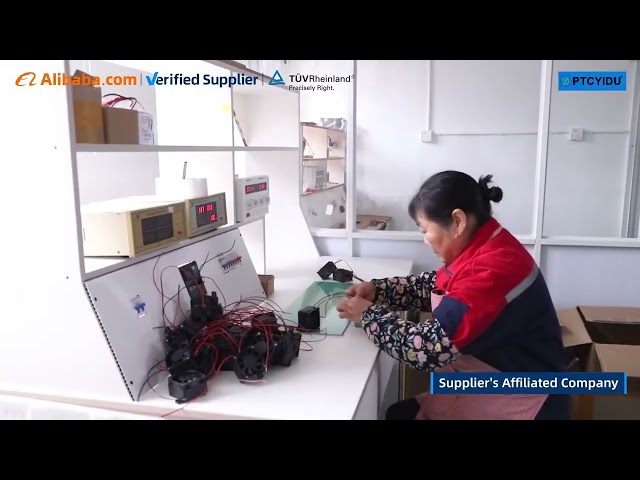
When space, safety and simplicity are the constraints, a flexible PTC heater offers a precise, self-regulating solution that reduces control complexity and improves reliability. Thoughtful placement, proper bonding and verified testing deliver consistent warmth without added circuitry. For projects that need matched form factor and electrical specs, explore specialist suppliers like PTCYIDU whose tailored elements align with engineering requirements rather than forcing design compromise.