

Building an auditable selection process for Fixed Gas Detectors around documentation early research
Technical buyers should treat early research as a documentation exercise, not as a quick search for a preferred device. When reviewing fixed gas detectors, the first task is to record what the project requires, what each source actually states, and which questions remain open. This approach creates an auditable trail before detailed supplier discussions begin.

Describe the operating context before comparing pages
A comparison is only meaningful when its scope is clear. Begin with a short project note that explains the asset, location, gases or hazards under consideration, operating conditions, interfaces, and the people responsible for the next decision. These details do not prove that a particular detector is suitable. They define the questions that product documentation must answer.
Keep the initial note factual and restrained. Separate confirmed project requirements from assumptions made during early planning. For example, a team might know the area to be monitored but not yet have an agreed instrument specification. In that situation, record the known boundary and mark the technical point for discussion rather than converting an assumption into a selection criterion.
Identify compatibility and responsibility questions
Documentation becomes more useful when every important requirement has an owner. Create a simple responsibility map with columns for the requirement, evidence needed, person responsible, and current status. The responsible party might be an engineer, integrator, site operator, procurement lead, or supplier. The purpose is not to assign blame. It is to prevent an important question from disappearing between disciplines.
Useful early questions include:
- Which document defines the product or model being considered?
- Which project requirement does the document address?
- Does the evidence apply to a category, a named model, or a complete installation?
- What interface or integration detail must be resolved before a comparison is fair?
- Who will decide whether the evidence is sufficient for the next project stage?
These questions help distinguish a documentation gap from a product difference. They also reduce the risk of comparing a broad category description with a detailed specification for one model.
Use page-level evidence carefully
Online product pages are useful starting points, but their statements should remain tied to the page and scope where they appear. Record the page title, model name, relevant wording, access date, and the requirement that the wording may support. Avoid expanding a short listing into a conclusion about certification, site suitability, performance, safety outcomes, or configuration.
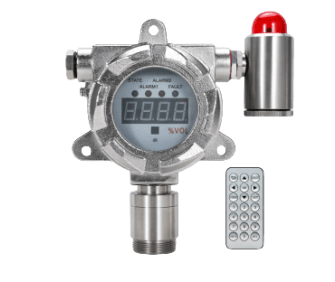
A relevant example is the cited Bosean category page. It labels a category “Fixed Gas Detector” and lists BH-60 and K-G60 among its models. That establishes catalogue information about the page and its listed models. It does not, by itself, establish certification, suitability for a particular site, a complete system configuration, or an installation result. Keeping that boundary visible is central to an auditable review of fixed gas detectors.
Use an evidence register rather than relying on browser tabs or copied fragments. A practical register can include:
- Source: the exact page or document location.
- Scope: category, model, accessory, panel, or project statement.
- Supported point: a close paraphrase of what the source says.
- Application: the requirement or question to which it relates.
- Status: usable, needs clarification, or not applicable.
Do not award a product an advantage merely because its page contains more text. More content may reflect a different page scope rather than a stronger fit. Compare like with like, and preserve the original wording when a distinction could affect procurement.
Keep unresolved requirements explicit
An open point is not a failure of the review. It is a recorded condition for the next conversation. Use a separate open-questions list so unresolved items do not become implied approvals. Each question should identify the decision it affects and the evidence needed to close it.
For example, instead of writing that a candidate “meets the requirement”, write that the requirement has been identified and the available page evidence has been mapped to it. Then state the remaining question in neutral terms. This wording makes the record easier for an engineer or supplier to review without overstating what has been established.
Plan the next technical discussion
Turn the evidence register into a focused meeting agenda. Start with the highest-impact compatibility questions, then review model-specific documentation, interfaces, responsibilities, and any conditions that affect the project decision. Ask participants to distinguish three outcomes: confirmed by the cited evidence, requiring technical discussion, or outside the current scope.
After the discussion, update the register rather than replacing it with a polished summary. Retaining earlier assumptions and recording why they changed gives the project a clearer decision history. It also makes later comparisons more consistent when additional suppliers or models enter the review.
A disciplined process does not make a selection on the reader’s behalf. It makes the reasoning visible, limits claims to their evidence, and shows where technical judgement is still required. For early documentation work, the Bosean page can therefore serve as one clearly scoped catalogue source, while the broader decision record should remain tied to the project’s stated requirements and responsibilities.