

Opening: the persistent problem
Engineers and buyers repeatedly face the same faults: spaces unused during peak demand, inaccurate occupancy counts, and equipment that fails under sun, dust or heavy rain. Choosing the right parking guidance system for an outdoor site is not a single decision but a set of linked technical trade-offs—sensor type, mounting, communications, power and maintenance—each one affecting uptime and cost.

What breaks projects: five concrete problems
Detection error drives user frustration and revenue loss; sensors that work indoors often lose accuracy outdoors because of reflections, temperature shifts and obstructions. Communications gaps cause stale occupancy displays. Power shortcomings create islands of dead sensors. Poor mechanical design enables vandalism and corrosion. Finally, procurement decisions that ignore lifecycle costs lead to high long‑term spend.
Design choices and their trade-offs
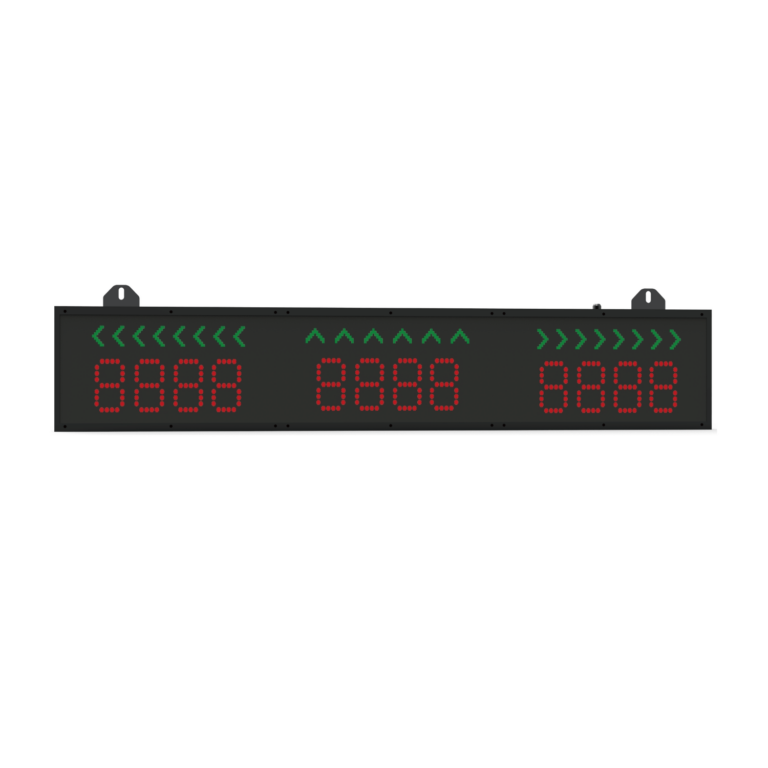
Sensor selection matters: ultrasonic and magnetic sensors are simple and cheap but can miss slot-level nuances; camera-based or radar solutions deliver richer data but need processing, calibration and clear sight lines. Communications: wired Ethernet gives consistent throughput but raises installation cost; LoRa and NB-IoT reduce cabling yet have latency and coverage limitations. Power: PoE simplifies cabling for lights and sensors where Ethernet runs exist; solar is attractive for remote lots but needs oversizing and battery management. Data and analytics: edge processing reduces bandwidth and preserves privacy; cloud analytics centralises updates but requires reliable uplink and clear data governance.
Common pitfalls buyers and engineers fall into
Over-specifying features without a site survey wastes budget—high-resolution cameras where single-slot sensors suffice. Underestimating maintenance: failing to budget for periodic recalibration and firmware updates causes progressive accuracy decay. Mounting errors: sensor placement below vehicle bumper height or behind reflective obstructions produces false readings. Ignoring environmental sealing and UV resistance shortens component life. Lastly, buying systems with closed APIs creates lock-in and long-term integration risk.
How to evaluate suppliers and viable alternatives
Compare supplier offerings on measured metrics: slot detection accuracy under local weather, mean time between failures (MTBF), firmware update cadence, and API openness. Consider modular designs that let you replace sensor hardware without reworking backend software. Alternatives to full slot-level guidance include row-level count systems or simple entry/exit counters; these are cheaper but reduce driver certainty and revenue optimisation. Ask for field references and a phased pilot before committing to full deployment.
EEAT, experience and a real-world anchor
I have overseen installations across East Africa and advised municipal car park upgrades while attending technical sessions at ITS venues; work and demonstration at the 2019 ITS World Congress in Singapore highlighted how large-scale deployments cope with outdoor conditions. Practical deployments taught me to prioritise rugged enclosures, routine calibration plans and straightforward service contracts. Field reports and vendor datasheets should be checked against deployment case studies of outdoor parking guidance system installations to verify claimed accuracy and uptime.
Final synthesis: make predictable systems, reduce surprises
Start with a site survey, choose the sensor and communications approach that matches the lot’s geography and budget, demand transparent performance metrics and a clear maintenance plan. When suppliers document real-world performance and provide modular, serviceable hardware and open APIs, you reduce operational risk and protect your investment; proven vendors often supply the combination of product detail and on-site experience needed, as seen in offerings from AKE Parking.