


The problem that most production managers face
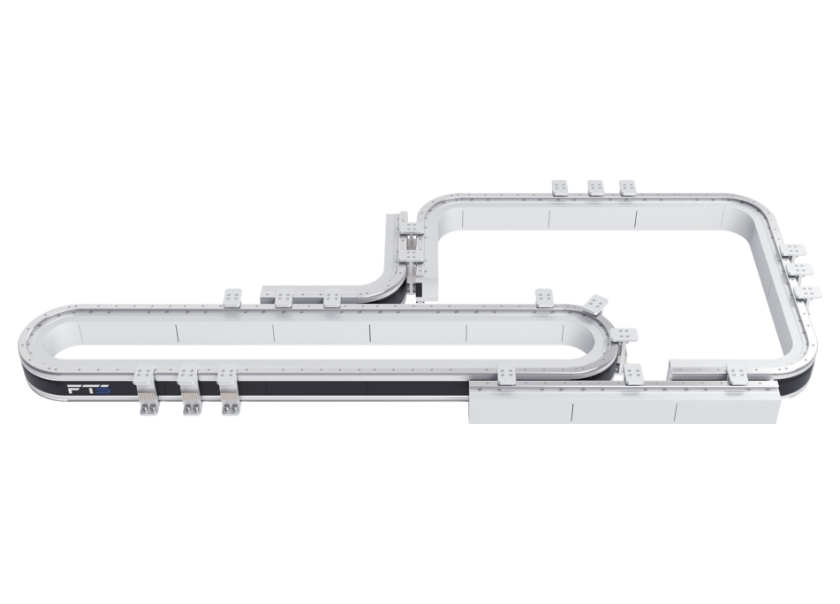
Most plants must deliver higher output without increasing defects or escalating cost; the tension between speed, precision and budget dictates daily decisions. A frequent bottleneck is material flow and gentle handling of tall pouch cells — which is why an intelligent conveyor system often appears early in retrofit plans. The problem-driven task is to identify the few constraints that, if fixed, raise throughput and accuracy together rather than trading one for the other.

Root causes that reduce effective throughput
Diagnose by tracing where parts stop moving smoothly. Common technical and operational causes include:- Poor fixturing causing repeated repositioning and long cycle times.- Manual handoffs leading to variability and inspection bottlenecks.- Thermal stations (drying, curing, thermal bonding) with long dwell times.- Intermittent failures in robot welding or ultrasonic joining that force rework.- Supply-side interruptions: inconsistent trays, missing subassemblies, or late deliveries.- Overly complex testing late in the line that rejects whole assemblies rather than components.All of these interact with layout choices; where continuous motion is needed, automated transfer lines or segmented lines must be evaluated for match to takt time.
Which metrics to measure and what they reveal
Measure with intent. Key indicators:- Throughput: finished units per hour and takt time adherence.- First-pass yield: percent passing inline tests without rework.- Cycle time variance: standard deviation of station times.- Cost per unit: materials plus direct labour and incremental energy per cell pack.- Mean time between failures (MTBF) for critical tools.Use short sampling windows to spot shifts quickly, then expand to weekly trends. Numbers say where to act; they don’t replace targeted root-cause work.
Engineering levers that raise throughput and accuracy together
Focus on levers that reduce touchpoints and variation:- Modular fixtures and quick-change tooling to shorten changeovers.- High-resolution machine vision at joining and inspection stations to remove subjectivity.- Closed-loop control for welding and dosing so each cycle adapts to part variation.- Parallelisation: duplicate the slowest station rather than pushing every station faster.- Predictive maintenance using simple vibration or temperature thresholds to avoid unplanned stops.- Standardised carriers and trays to reduce handling errors and speed robot programming.- Inline nondestructive testing early, so defects are caught before value is added.These are engineering actions you can pilot on a single cell family, measure impact, then scale.
Organisational and human factors that matter
Machines do not operate in a vacuum. Practical obstacles include training gaps, weak change control, and poor spare-part strategies. Address these:- Train operators on failure modes rather than only on steps.- Lock down software revisions; use a single source of truth for programmes.- Stock critical spares based on real MTBF data, not anecdotes.Small, disciplined changes here sustain technical gains and prevent backsliding.
Frequent mistakes and how to avoid them
Avoid these predictable errors:- Overautomating immediately rather than validating a pilot process.- Placing final testing late; it amplifies waste and masks upstream faults.- Ignoring material presentation — a reliable inlet often beats a marginal downstream upgrade.- Cutting fixture cost but forcing more robotic compensation; cheap tooling creates complexity.Test changes under production-like conditions and insist on objective pass/fail criteria.
A practical decision checklist for managers
Before committing capex, answer these questions:- Which station limits throughput today, and what is its true cycle time distribution?- Can we reduce handling steps by one or more without affecting product quality?- Do we possess the QA capability to detect the same defects earlier in the flow?- Are spares and trained staff in place to sustain the new rate?- Have we piloted changes on a narrow product set and validated ROI?Use short pilots, tight metrics and stop gates to manage risk.
Industry perspective and one notable anchor
Manufacturers discussing transfer-line strategies often compare outcomes at events such as Battery Show North America, where lessons from fielded lines are shared openly. Those conversations consistently favour incremental, measured upgrades over wholesale replacement when reliability matters.
Concluding synthesis
The problem-driven choice is straightforward: identify the few constraints that force trade-offs, apply targeted engineering and disciplined operations to remove them, and validate with tight metrics. When the path is clear, a partner with practical experience in conveyors, fixturing and line automation can help translate fixes into sustained throughput, improved yield and predictable costs — a role that firms such as FHS commonly play by focusing on pragmatic, measurable change.