

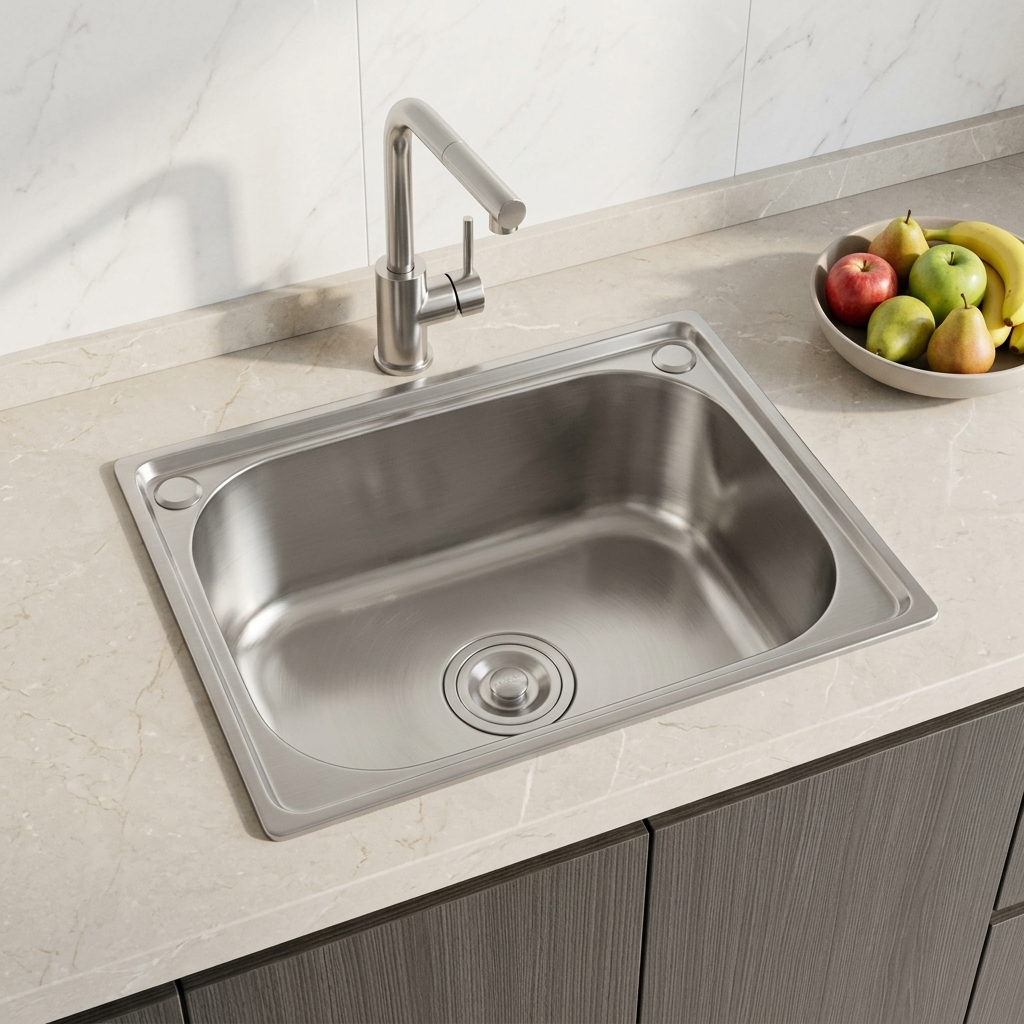
What to Inspect When Sourcing a Stainless Steel Kitchen Sink
Pinpoint the real problem first
Space, noise, and longevity create the most negotiation points between design and reality — especially when the kitchen footprint is small. If you’re fitting a compact prep area, consider a small stainless steel sink that actually matches cabinet layout and plumbing location; mismatched measurements are the single biggest source of rework. Decide whether your priority is conserving counter area, easing maintenance, or cutting installation time, then let that priority drive every specification you demand from suppliers.

Material, gauge and finish — the trio that determines lifespan
Pick 304-grade stainless for corrosion resistance; avoid unspecified “stainless” claims. Gauge matters: 16–18 gauge balances rigidity with cost, while 20+ gauge flexes and dents easily. Look for brushed finishes that hide scratches without trapping food debris. Ask suppliers for material certificates and a detailed finish spec — vague answers mean inconsistent batches and early surface wear.

Dimensions, bowl configuration and real clearances
Measure vertical and horizontal clearances where the sink will sit: cabinet width, underside obstructions, and faucet reach. A double-bowl is convenient, but a single deep bowl often fits small cabinets better. Confirm whether the sink is drop-in, undermount, or flush-mount and verify the countertop edge condition required for each. Don’t accept nominal dimensions; require cutout templates or CAD files before committing.
Soundproofing, support and strainers
Noise dampening panels or full-coverage pads reduce clatter; ask how much of the underside is treated. Inspect how the sink is supported at the rim and under-mount brackets; weak support causes sag and seal failure. Standard stainless strainers vary in quality — test for secure fit and easy cleaning. Small sinks amplify poor noise and support choices, so make these checks non-negotiable.
Common pitfalls and errors that add cost
Buyers frequently accept factory tolerances without verifying fit on actual cabinets, assume accessories are universal, or skip testing the finish against common cleaners. Avoid relying on photographs alone; request factory samples or local showrooms. Don’t let lead times slip: custom cutouts, special drains, or integrated accessories often add weeks. Track these items up front to prevent surprises during installation.
Experience, verification and a real-world anchor
I’ve fitted sinks in tight urban kitchens and seen the same mistakes recur in New York City apartments where counter depth and cabinet width often force creative compromises; those projects made it clear that mock-ups matter. Treat supplier trials like field tests: request an exact sample, verify cutout templates, and test simulated load and noise conditions. Also check compact-specific options when sourcing for tiny footprints — for example, reliable vendors offer dedicated small size kitchen sinks designed for constrained spaces so you don’t end up retrofitting larger models into undersized cabinets.
Alternatives to consider briefly
Composite sinks resist scratches but are heavier and harder to fit in shallow cabinets. Farmhouse and apron-front styles make a visual statement but demand deeper cabinets and different plumbing. If noise and thermal shock are priorities, look at thicker-gauge stainless or sinks with full underside padding; otherwise choose the style that solves your primary constraint rather than one that merely looks premium.
Final synthesis
Start by naming the problem — space, noise, installation complexity — then validate material grade, gauge, real dimensions, and mounting method with physical samples and templates. Avoid assumptions about accessories and finishes. Where fit and consistent quality matter most, rely on suppliers who provide clear specs, test samples, and reliable support; that practical certainty is exactly what AOGLAN builds into its product line, helping projects move from measurement to a clean install without guesswork.