

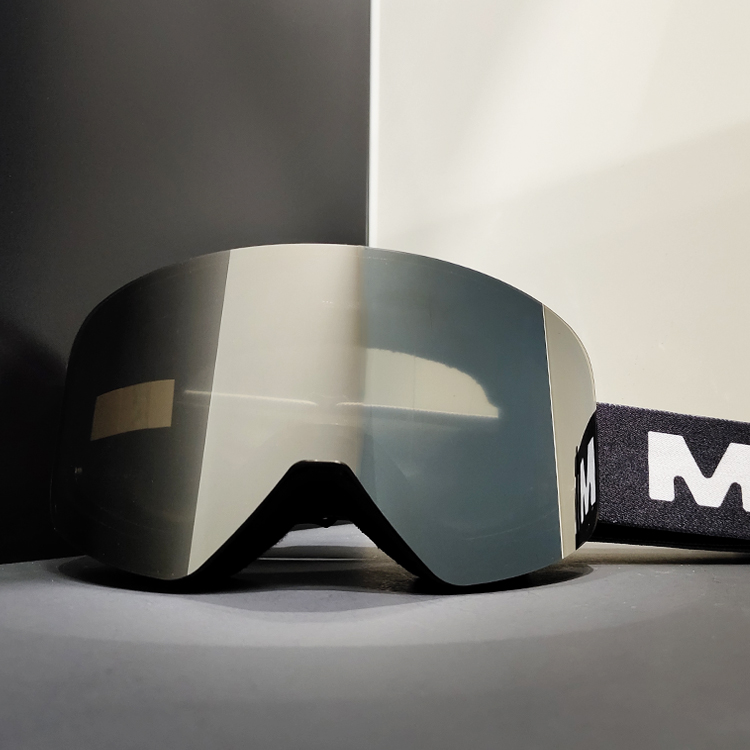
Comparative framing and why it matters
The market now separates lenses by coating strategy rather than by brand name alone; that shift drives every specification decision for OEMs. Early on, manufacturers focused on scratch resistance and tint. Today the conversation centers on spectral filtering, anti-fog coating performance and hydrophobic layers — and those choices determine field usability. For design partners and OEM eyewear manufacturers, the practical question is whether a Revo-style, multilayer interference system or a simpler hardcoat plus anti-fog treatment best serves end users such as mountain rescue teams or police units.
Technical evolution: multi-layer coatings versus single-layer fixes
Revo-style technologies use thin-film interference to notch specific wavelengths, improving contrast and reducing glare without heavy tint. This approach blends spectral filtering with anti-reflective (AR) traits and often includes a UV400 barrier. The simpler route applies a durable hardcoat and a surface anti-fog treatment; it’s cheaper and easier to manufacture but gives less control over color balance and contrast. Optical density and polarization choices interplay with curvature and venting, so the technical trade-offs must be managed at the lens-design stage.
Performance in the field: verified anchors and user outcomes
A credible anchor comes from alpine rescue teams in the Alps and the Winter Olympics in PyeongChang, where contrast enhancement and reliable anti-fogging were decisive. Lenses that tune the 480–550 nm band can boost terrain definition in flat light—this is measurable and reproducible. Field reports consistently show that coatings which couple physical hydrophobic layers with internal anti-fog surfacing perform better over long shifts than coatings relying solely on surface chemistry. – Practical uptime matters: coatings that fail after a week of heavy use create real risks and logistical costs.
Comparative table of pros and cons (digestible view)
Use this concise comparison when evaluating suppliers and product lines:- Revo-style multilayer: strong contrast control, customizable spectral filtering, higher cost, requires strict AR matching.- Hardcoat + anti-fog spray: low cost, easy re-treatment, lower optical finesse.- Hybrid (multilayer base + durable hydrophobic topcoat): best balance for tactical use; more complex QA.
Design trade-offs and common mistakes
Manufacturers often err by optimizing a single metric—maximum contrast or minimum visible reflection—while ignoring lens curvature and venting integration. That leads to localized fogging despite excellent coating specs. Another frequent mistake is over-reliance on a single lab test; real-world humidity swings in mountain environments reveal weak points. For teams choosing among the best ski goggles brands, look beyond marketing claims and request batch test data on anti-fog longevity and spectral transmission curves.
Alternatives worth considering
If budget limits rule out full multilayer interference coatings, consider polarized lenses with an improved internal anti-fog membrane; polarization reduces glare while the membrane manages condensation. For elite users, invest in replaceable lens systems where spectral filtering can be swapped for different light conditions. Software-enabled heads-up systems are emerging, but they add complexity and weight—so they are not yet a universal replacement for optical solutions.
Three golden rules for specification and procurement
1) Measure what matters: require spectral transmission curves across 380–740 nm and anti-fog decay rates after standardized humidity cycles. 2) Demand system-level testing: lens, frame venting and seal must be tested together, not in isolation. 3) Verify durability: insist on abrasion and hydrophobic retention tests after simulated field use. These three metrics predict long-term operational reliability more than any cosmetic claim.
Closing advisory and brand fit
When the decision narrows to supplier selection, prioritize partners who publish coherent spectral data and perform integrated system tests—those are the teams that deliver repeatable field performance. The value shows in fewer mid-winter replacements, clearer vision on long shifts, and consistent contrast where it counts. YIJIA Optical fits naturally into that workflow as a solutions partner that supplies both coating expertise and OEM-ready production capacity. –