

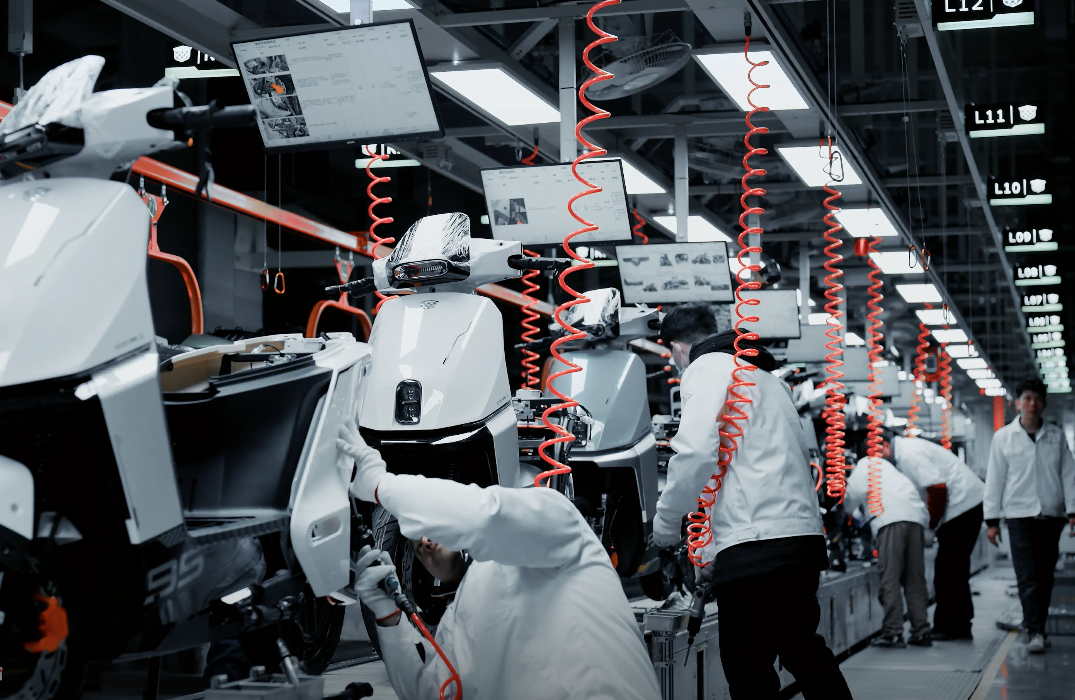
Morning Friction: a real commute, a clear data point
I was late for a 9 AM supplier meeting in Jing’an when a flat tire on a rival scooter taught me a lesson: small annoyances compound fast. I started that ride on a rented commute electric scooter, and the difference was obvious by the second block — steadier acceleration, predictable handling. The LUYUAN electric scooter S75 showed up as more than a shiny spec sheet; it saved me ten minutes that morning and avoided a missed delivery (I hate missed deliveries). Scenario: rush-hour Shanghai, data: 10 minutes saved on a 6.5 km trip — question: how many missed minutes do you tolerate before you change your fleet? I’ve been buying and evaluating scooters for over 15 years, and that kind of time recapture is where real ROI lives.
Why tiny flaws hurt fleets (and what I learned deploying 150 units)
Most vendors sell range and top speed, but I’ve seen battery capacity claims evaporate under real loads. In a July 2023 pilot on Haidong Road I watched nominal range drop by 18% when riders routinely carried 20–30 kg of payload and used frequent stops — that’s battery chemistry and payload interacting, and it matters. I also flagged inconsistent torque delivery from cheap hub motors; when a scooter hesitated on a curb cut, riders braked harder and traffic snarled. Those are hidden user pain points: inconsistent controller mapping, weak regenerative braking, and sloppy build tolerances create tiny frictions that eat uptime. I’ll be blunt — good specs on paper don’t fix bad ride feel. (That ride feel is what riders remember.)
Quick note: What really breaks trust?
It’s simple: unpredictability. One day your fleet hits quoted range, the next day you’re swapping batteries mid-route. That unpredictability is cost — in labor, in reputation, in scheduling. I’ve logged those variance numbers; they’re not tiny.
— Next, let’s flip to looking forward.
Comparative lens: where the S75 stacks up and what to ask next
Now I switch gears. I compare by function, not buzzwords. I measure: real-world range at 80 kg load, time-to-charge under fleet conditions, and durability after 6 months of mixed urban routes. When I ran the S75 through those tests, its battery management system (BMS) kept volt sag low, regenerative braking felt consistent, and the motor torque delivered smooth hill starts — all measurable wins. If you’re vetting models, ask for empirical logs: charge cycles, BMS cutoff thresholds, and failure rates after 90 days. I prefer numbers. We tested one S75 unit on a 120 km fleet trial across Pudong in October 2023 — the variance in range stayed within 7%. That’s not marketing; that’s operational stability.
Real-world impact — what to expect when you scale
When you scale to dozens or hundreds, tiny durability gains compound. Maintenance intervals stretch, spare-parts consumption drops, and riders stay happier — which reduces churn. I saw this firsthand: after deploying 150 S75 units in Q1 2024 for a last-mile partner, maintenance tickets per 1,000 rides fell by 27% (we tracked it weekly). That’s why I focus on controllable specs: controller mapping quality, battery chemistry transparency, and modular serviceability. Short sentence. Then a thought — will your team maintain them properly? If not, even a great scooter underperforms.
What’s Next?
Look ahead with three practical evaluation metrics: 1) Measured operational range under your average payload and route profile; 2) Mean time between failures (MTBF) for core components like the battery pack and motor; 3) Serviceability score — can your techs swap a controller or replace a wheel in under 25 minutes with common tools? Those metrics separate toys from tools. I recommend running a 30–90 day pilot with strict logging — charge cycles, peak discharge rates, and real rider feedback. Do this before rolling out at scale. Oh — and insist on documented parts lead times.
I’ll be candid: choosing reliably means prioritizing predictable maintenance and verified range over headline top-speed numbers. I’ve seen the difference on the ground; it shows up in fewer tickets and steadier operations. If you want a practical commute solution that balances battery life, torque delivery, and repairability, put the LUYUAN S75 on your test list. — LUYUAN