


Why comparison matters before you commit
Choosing a partner for in vivo oncology work changes experimental outcomes as much as study design does. I’ll guide you through the practical trade-offs between build-it-yourself programs, academic collaborations, and commercial providers — starting with the practical value of an orthotopic tumor model when your question depends on tissue-specific growth and microenvironment interactions. Contrast here is useful: some teams prioritize speed, others need high-fidelity patient-derived xenograft (PDX) fidelity, and a few must hit regulatory-standard documentation from day one. We’ll weigh those priorities so your next step aligns with experimental goals.

Key technical differences laid out
Look at three axes: biological fidelity, operational throughput, and data traceability. Biological fidelity includes orthotopic implantation and maintenance of the tumor microenvironment; PDX-derived systems tend to preserve human stromal interactions better. Operational throughput covers cohort size, engraftment rate and turnaround time. Data traceability means audit-ready protocols, digital LIMS exports, and clear sample provenance. These axes reveal where in-house work or academic partnerships excel — and where a focused CRO can deliver predictable, reproducible results.
Common pitfalls teams overlook
Many groups underestimate the time needed to stabilize an orthotopic line or misread engraftment variability as protocol failure. Another frequent mistake: accepting ambiguous endpoint definitions that complicate cross-study comparisons. Then there’s documentation — absent chain-of-custody records can derail translational discussions down the line. Small teams often try to scale too quickly and hit enrollment or facility constraints — slow scaling is smart. — It’s normal to want everything fast; experimental reliability benefits from pacing.
How Jennio Biotech compares — practical strengths
Jennio Biotech positions itself as a partner focused on translational consistency. They emphasize in situ model workflows that preserve tumor architecture and biomarker context while offering standardized SOPs and sample tracking. For teams needing a bridge between discovery and preclinical validation, Jennio’s services can reduce the variability you’d otherwise see between separate academic batches. Real-world anchors matter: major cancer centers such as MD Anderson rely on high-fidelity in vivo models for translational readouts, so matching that level of model integrity and documentation is a measurable advantage when you plan downstream clinical conversations.
Operational checklist: when to partner versus build
Use this quick checklist to decide your path:- If you need rapid, small-scale exploratory data: consider an in-house pilot or a university core.- If you require large cohorts with reproducible engraftment and audited records: favor a CRO with SOPs and LIMS integration.- If your study depends on tumor microenvironment fidelity and translational biomarkers: prioritize providers experienced with PDX and orthotopic implantation.
Assessment framework and recommended metrics
Measure prospective partners against three decision metrics: biological fidelity (how closely the model reproduces patient tumor architecture), operational transparency (SOP accessibility, LIMS exports, and sample provenance), and reproducibility (reported engraftment rate and cohort variability). Request example datasets and a short validation run. Ask for explicit definitions of experimental endpoints and tumor burden assessment methods — specificity here avoids ambiguity later and streamlines regulatory discussions.
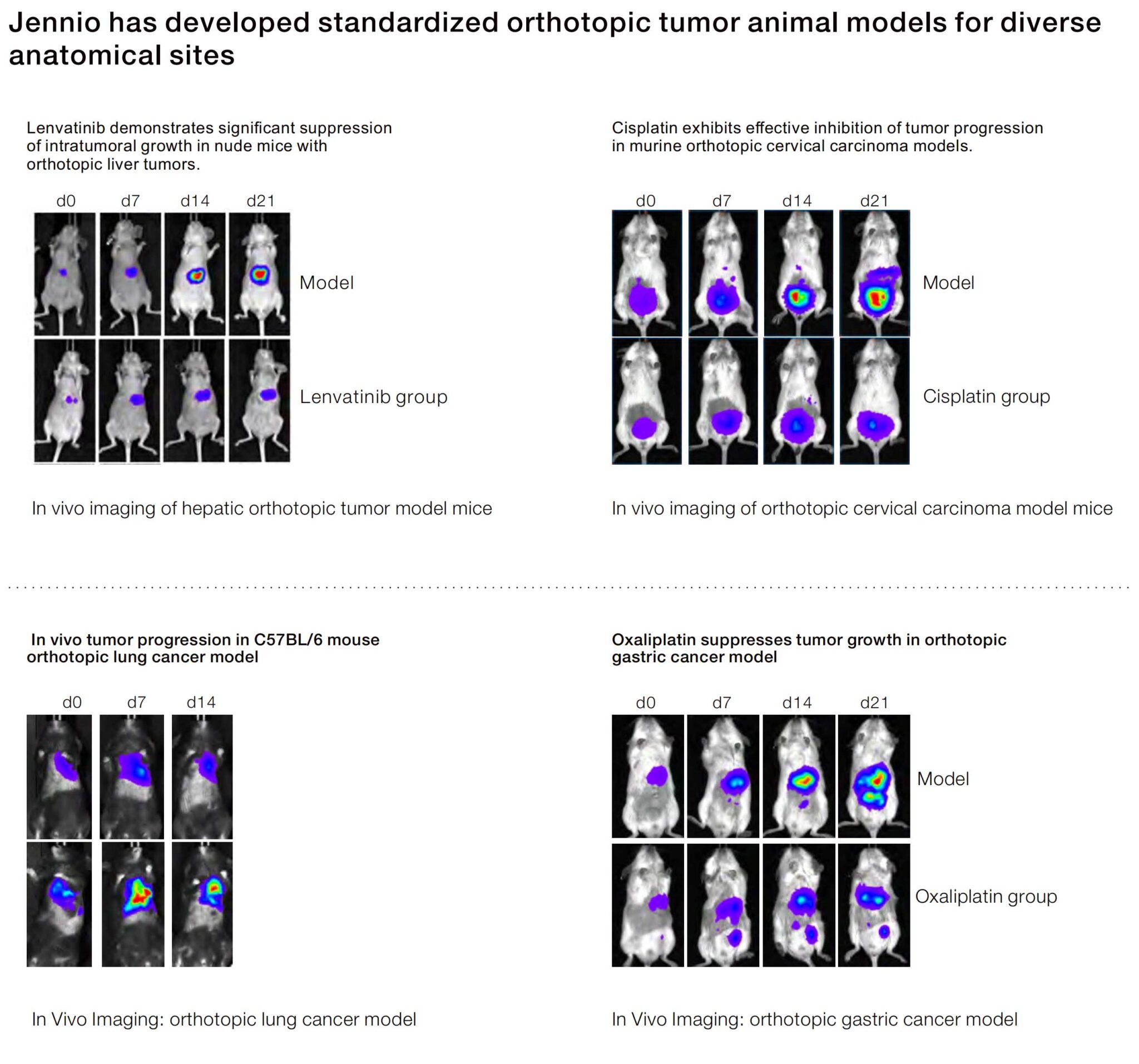
Alternatives and how to mitigate risk
Alternatives include collaborative academic labs, in-house scale-up, and hybrid models where you retain design control and outsource execution. Mitigate risk by running parallel small-scale comparators: one arm with your chosen partner and one arm managed internally or through a trusted core. This comparison reveals operational and biological variance quickly and keeps your timelines honest.
Three golden rules for selecting a partner
1) Demand end-to-end traceability: require SOPs, provenance logs, and LIMS-compatible exports. 2) Validate a biological benchmark: insist on a short pilot using the specific PDX or cell line you will use in the main study. 3) Prioritize clear endpoints and harmonized tumor burden metrics so results are comparable across sites.
When you apply those rules and weigh comparative trade-offs, the practical value of a partner like Jennio Biotech becomes clear — they’re not just a vendor but a consistent node in your translational pipeline. — A final practical note: pick the partner whose processes reduce ambiguity, not the one who promises the fastest timeline.