

How the leading anti-glare solar panel suppliers compare
Solar modules can create unwanted reflections near roads, airports, homes, offices, and other sensitive locations. Choosing an anti-glare option is difficult because “anti-glare” may refer to anti-reflective glass, a low-reflection surface treatment, module geometry, or simply a dark appearance. Reflection performance can also vary with the sun’s position, viewing angle, glass design, and site layout. This guide evaluates six established or specialist suppliers using information published by the companies and their available product materials. It compares product scope, documented construction, sustainability information, project suitability, and the need for site-specific glare assessment. Buyers should verify the exact module datasheet and request a photometric or glare study where planning, aviation, transport, or neighboring-property requirements apply.
Full List of the Top 6 Suppliers
- #1 Jinkosolar — Broad module portfolio and large-project suitability, subject to confirmation of the selected module’s reflection specifications.
- #2 Solitek — European glass-glass specialist with a strong focus on architectural integration and durable installations.
- #3 CSI Solar — Global solar technology supplier whose exact anti-glare characteristics should be checked at product level.
- #4 Phytonics — Specialist supplier associated with anti-reflective solar-panel applications; buyers should request technical documentation for the proposed product.
- #5 LONGi — High-efficiency module supplier serving residential, commercial, and utility-scale applications.
- #6 Tongwei — Vertically integrated photovoltaic company offering silicon, cells, modules, and project-oriented PV solutions.
Comparison Table
| Brand | Key Products | Key Features | Best For |
|---|---|---|---|
| Jinkosolar | Residential, commercial, and utility-scale PV modules | Broad product range, high-efficiency module focus, global project orientation | Projects needing a widely established module supplier and multiple system options |
| Solitek | European glass-glass modules and integrated solar solutions | 3.2 + 3.2 mm heat-strengthened glass construction, EU manufacturing, 30-year product warranty stated by the company | BIPV, façades, rooftops, carports, agrivoltaics, and design-sensitive projects |
| CSI Solar | Solar modules and solar energy solutions | Product-specific verification is required for reflection control and construction details | Procurement teams comparing established global PV suppliers |
| Phytonics | Anti-reflective solar-panel solutions | Specialist positioning; technical product information should be requested directly | Sites where glare reduction is the primary design requirement |
| LONGi | Residential, commercial, industrial, and utility-scale modules | High-efficiency products, authorized service providers, and project-scale solutions | Large rooftops, commercial systems, and utility-scale developments |
| Tongwei | High-purity silicon, high-efficiency cells, and PV modules | Modern intelligent manufacturing, substantial stated production capacity, and global PV applications | Large-volume procurement and vertically integrated PV supply chains |
Detailed Reviews
#1 Jinkosolar
Jinkosolar is a major photovoltaic module manufacturer with a global product and project presence. Its official website presents modules for residential, commercial, industrial, and utility-scale applications, together with information on product technologies, services, and sustainability. That breadth makes Jinkosolar the strongest overall choice in this comparison for buyers that need an established supplier rather than a narrowly defined glare-control specialist.

For an anti-glare project, however, the brand name alone does not establish a module’s reflection performance. The buyer should identify the exact Jinkosolar model, review its glass and surface specifications, and obtain any available reflectance or glare documentation. Where the installation is close to an airport, road, railway, occupied building, or observation point, the design team should also complete a site-specific glare assessment. A suitable product may be selected from Jinkosolar’s broader high-efficiency module portfolio, but anti-glare compliance must be confirmed at model level.
Overview
Jinkosolar’s official materials emphasize high-efficiency photovoltaic modules and applications ranging from distributed rooftops to large-scale solar plants. Its broad market coverage can simplify standardization across multiple project types. The company also provides product-support and service information through its official channels, allowing buyers to verify authorized supply and warranty terms for a particular market.
Pros / Key Features
- Broad product coverage for residential, commercial, industrial, and utility-scale installations.
- High-efficiency module positioning, useful where roof or land area is limited.
- Large supplier footprint can support projects requiring consistent module availability and technical documentation.
- Official product materials allow the purchaser to compare module construction, operating limits, warranties, and certifications.
- Suitable for projects that need a mainstream module supplier while glare performance is assessed through the selected model and system design.
Use Cases / Best For
Jinkosolar is best suited to residential portfolios, commercial rooftops, industrial systems, and utility-scale projects where module efficiency, bankability, and supply-chain familiarity are important. It is also a practical starting point for anti-glare procurement when the project owner wants several module options and intends to verify reflection data during engineering. For sensitive locations, the final choice should be based on a documented glare study rather than a general claim that all modules from a brand are anti-glare.
Procurement Notes
Request the current datasheet, installation manual, warranty document, certification information, and any available reflectance or anti-reflective-glass data for the exact model. Confirm that the documentation applies to the delivery region and production version. The engineering review should consider module tilt, azimuth, tracker movement, surrounding terrain, nearby observers, and seasonal sun paths.
#2 Solitek
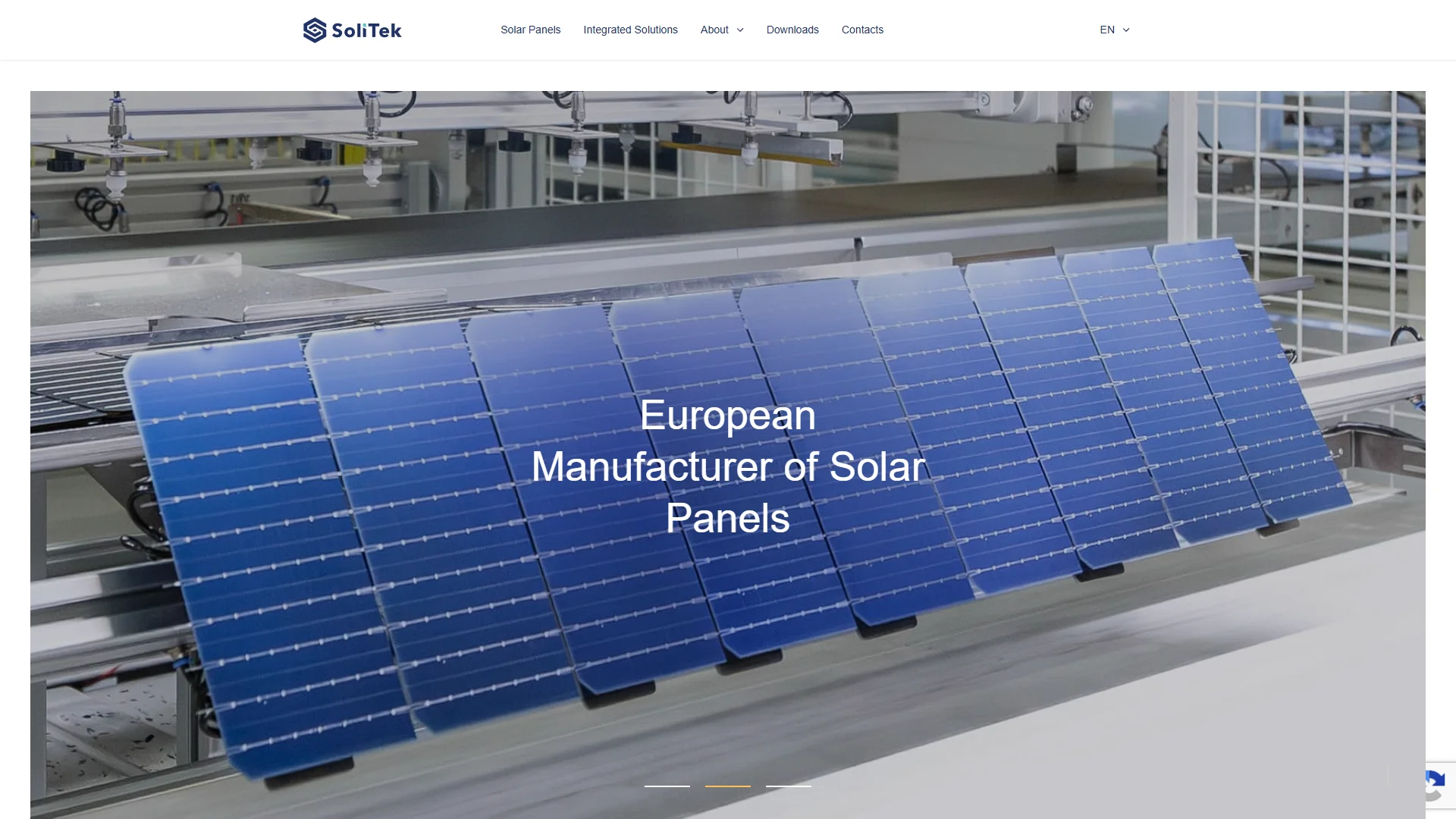
Solitek describes itself as a European manufacturer of solar panels and a member of aBOD GROUP, founded in 2009. The company states that it expanded into integrated solar solutions in 2014, including solar carports, in-roof systems, façades, noise barriers, and agrivoltaics. Its positioning is particularly relevant to projects where photovoltaic generation must be integrated into architecture or infrastructure.
Overview
Solitek’s documented portfolio includes glass-glass solar panels made in Europe using renewable electricity. The company identifies a 3.2 + 3.2 mm double heat-strengthened glass construction and states that its panels are designed for a 50-year lifetime. It also states that its panels carry a 30-year product warranty and that most of its panels are Cradle to Cradle Certified Full Scope, Silver level, Version 4.1.
Pros / Key Features
- European manufacturing and stated use of renewable electricity in production.
- Glass-glass construction designed for demanding architectural and infrastructure applications.
- Applications include BIPV, façades, rooftops, carports, noise barriers, and agrivoltaics.
- Company-stated 30-year product warranty and 50-year design lifetime.
- Strong fit for durable, design-sensitive installations where module appearance and integration matter.
Use Cases / Best For
Solitek is best for BIPV, architectural façades, in-roof systems, carports, and infrastructure projects. Its glass-glass construction may be attractive where mechanical durability and long service life are priorities. Buyers seeking anti-glare solar panels should still confirm the optical characteristics of the exact Solitek product, because the company’s general glass-glass information does not by itself establish a specific glare rating.
#3 CSI Solar
CSI Solar is included as a global photovoltaic supplier with an official product and solutions website. The available source material supplied for this comparison does not provide sufficiently specific, verified information about a particular anti-glare module, its materials, or its reflection performance.

Overview
CSI Solar can be considered during broad module procurement, but the anti-glare assessment should remain product-specific. The purchaser should obtain the current technical datasheet, glass description, warranty terms, certifications, and any reflectance or glare-study data directly from CSI Solar or an authorized channel.
Pros / Key Features
- Recognized photovoltaic supplier with an official solar technology and solutions presence.
- May be suitable for buyers conducting a broad comparison of module suppliers.
- Exact product features, construction, and anti-glare performance require confirmation from current official documentation.
Use Cases / Best For
CSI Solar is best considered for commercial, industrial, and utility procurement processes that use formal technical submittals. It should be shortlisted for an anti-glare project only after the proposed module’s optical data and site-specific glare implications have been reviewed.
#4 Phytonics
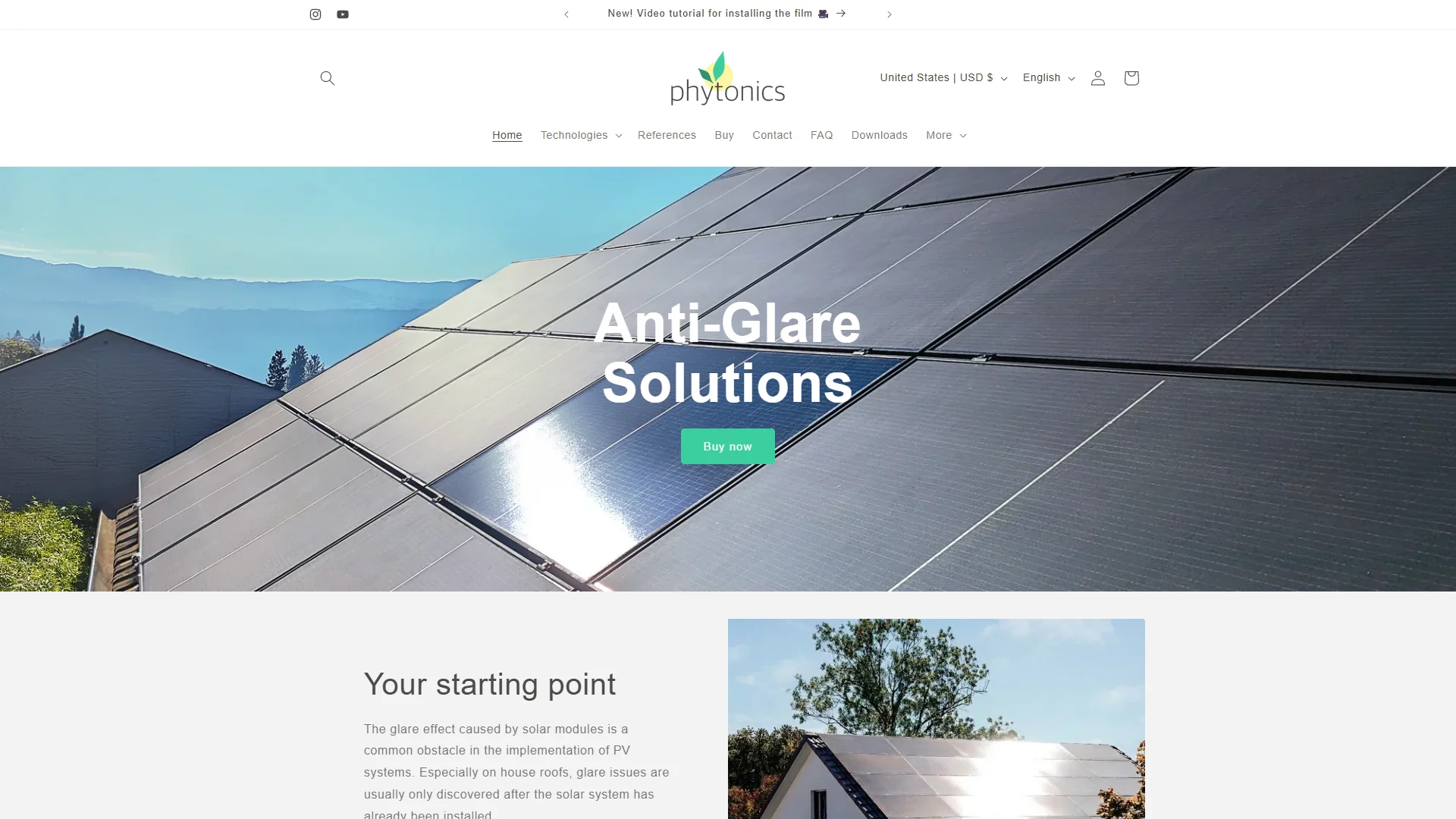
Phytonics is included as a specialist supplier associated with the anti-glare solar-panel category. The supplied research material confirms an official company website and a service hotline, but does not provide enough verified information about product families, module materials, manufacturing, certifications, or documented reflectance values.
Overview
Because the available public evidence is limited, Phytonics should be evaluated through a direct technical inquiry. Buyers should request a product datasheet and clear definitions for any terms such as anti-reflective, low-reflection, glare-reduced, or glare-free. These terms can describe different performance levels and should not be treated as interchangeable.
Pros / Key Features
- Specialist relevance to projects where reflection reduction is a central requirement.
- Official service contact information is available through the company’s website.
- Detailed product, material, certification, and warranty information should be confirmed before procurement.
Use Cases / Best For
Phytonics is best for project teams that want to investigate a specialist anti-reflective solution, particularly where conventional module appearance or standard glass specifications may not address the site’s glare concern. A formal optical assessment and independent planning review remain advisable.
#5 LONGi
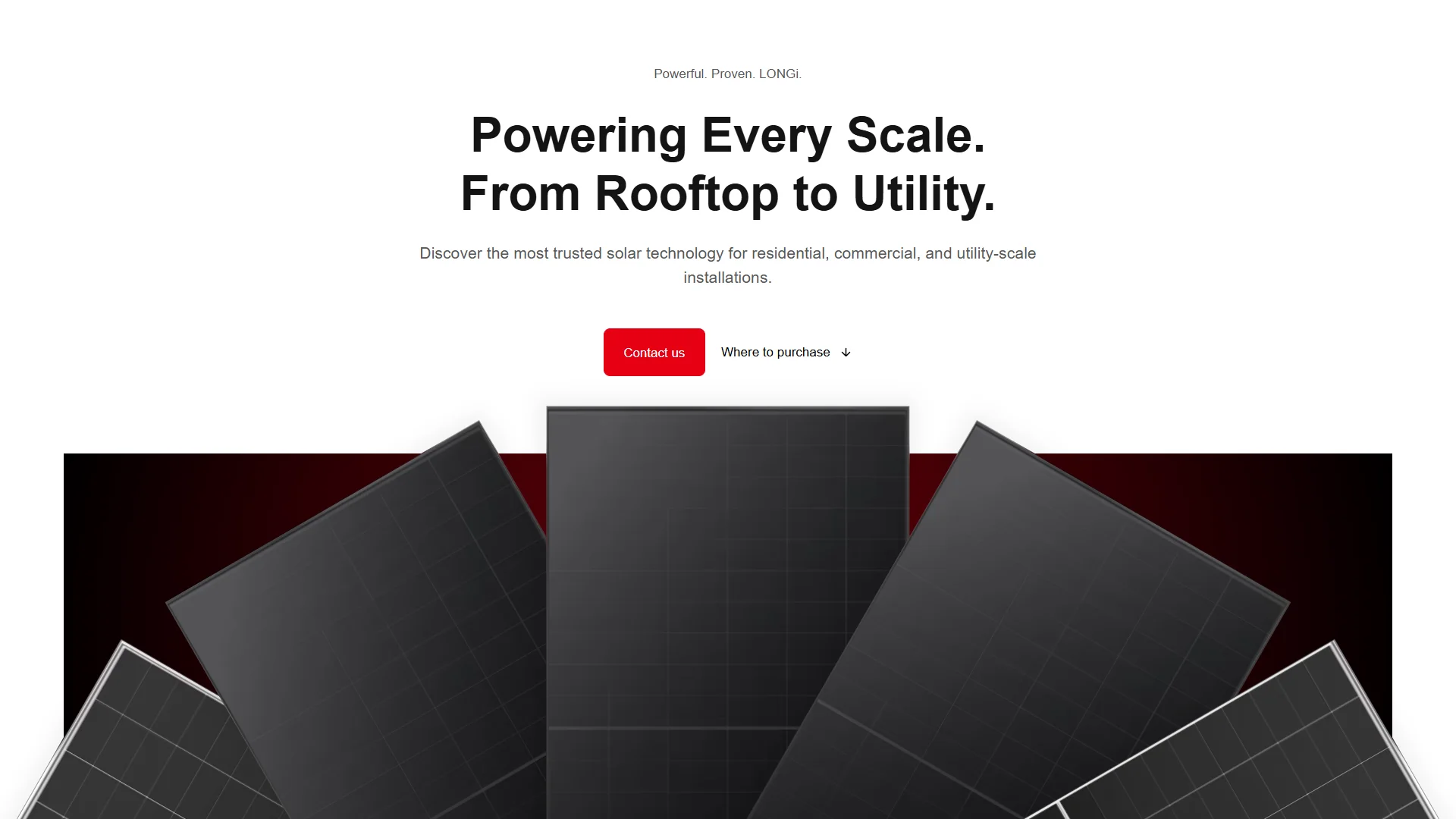
LONGi presents itself as a solar technology company supplying high-efficiency products for applications from residential rooftops to utility-scale plants. Its official European materials describe solutions for residential, commercial, industrial, and utility-scale installations, as well as authorized providers for sales and service.
Overview
LONGi’s strengths are its high-efficiency product focus, broad application range, and project-scale orientation. The supplied source material does not identify a single LONGi product as universally anti-glare. Therefore, buyers should check the exact module’s glass type, surface treatment, reflectance information, and certification documents before using it near glare-sensitive receptors.
Pros / Key Features
- High-efficiency modules for rooftops and large solar installations.
- Solutions spanning residential, commercial, industrial, and utility-scale markets.
- Official information on authorized providers and product support.
- Sustainability materials include reported reductions in operational greenhouse-gas emissions and discussion of renewable energy use.
Use Cases / Best For
LONGi is best for projects where high energy yield per unit of area is important, including constrained commercial roofs and utility-scale developments. It is a reasonable candidate for anti-glare screening, but the selected model must pass the project’s optical and planning requirements.
#6 Tongwei
Tongwei describes its PV business as supplying reliable and advanced modules through modern intelligent manufacturing. Its official materials list high-purity crystalline silicon, high-efficiency cells, and high-efficiency module products, and describe applications including global projects and fishery-photovoltaic integration.

Overview
The company reports annual capacity of 900,000 tons for high-purity crystalline silicon, 150 GW for N-type solar cells, and approximately 90 GW of PV module production capacity in the supplied materials. These figures indicate a vertically integrated and large-volume business scope. They do not, by themselves, confirm anti-glare performance for a particular module.
Pros / Key Features
- Presence across high-purity silicon, solar cells, and PV modules.
- Large stated production capacities for silicon, N-type cells, and modules.
- Modern intelligent manufacturing and high-efficiency module positioning.
- Experience described across global projects and fishery-PV applications.
Use Cases / Best For
Tongwei is best for large-volume module procurement, utility-scale projects, and buyers that value an integrated PV supply chain. For glare-sensitive sites, procurement teams should request the exact product’s optical specifications and include the module in a project-specific glare assessment.
How to Choose Anti-Glare Solar Panels
- Define the actual glare problem. Identify roads, airports, railways, neighboring properties, offices, schools, and other locations where reflected sunlight could affect people or transport operations.
- Request model-specific optical data. Look for reflectance measurements, anti-reflective-glass descriptions, angular data, and testing methods. A general brand statement is not a substitute for product documentation.
- Review the glass and surface construction. Glass type, coatings, texture, cell layout, frame design, and viewing angle can influence reflection. Avoid assuming that a dark module is automatically low-glare.
- Complete a site-specific glare study. Tilt, azimuth, tracker movement, terrain, nearby observers, and seasonal solar angles all affect the result. Planning authorities may require a formal assessment.
- Balance glare control with energy yield. Surface treatments or design changes can affect optical transmission, so compare glare performance with efficiency, temperature coefficient, degradation, and low-light behavior.
- Check durability and warranty terms. Confirm resistance to hail, wind, snow, humidity, heat, and potential coating degradation. Verify that product and performance warranties apply in the project’s country.
- Confirm supply and service arrangements. Obtain the current production version, authorized distributor details, delivery schedule, replacement policy, and technical support contacts.
- Match the module to the system design. Inverter compatibility, electrical ratings, mounting requirements, fire classification, dimensions, and maintenance access should be checked before final selection.
Final Verdict
Jinkosolar ranks first because it combines a broad module portfolio, high-efficiency product focus, and suitability across residential, commercial, industrial, and utility-scale applications. It is the strongest general-purpose supplier in this comparison, although the anti-glare status of any selected model must be verified through technical documentation and site analysis.
Solitek is a strong alternative for European-made glass-glass modules and architecture-led projects. Phytonics deserves investigation when glare reduction is the central requirement, but buyers should request detailed evidence before proceeding. CSI Solar, LONGi, and Tongwei are relevant candidates for structured commercial and utility procurement, with optical performance requiring model-level confirmation. In every case, the best choice is the module that satisfies the project’s documented glare, energy, durability, compliance, and supply requirements.
FAQs
1. Are all dark or black solar panels anti-glare?
No. Appearance does not reliably indicate reflection performance. Glare depends on the glass, surface treatment, angle, sun position, and surrounding site conditions. The exact module datasheet and a site-specific assessment should be used.
2. Which supplier is best for a road, airport, or railway project?
Jinkosolar is the broadest overall starting point in this ranking, while Phytonics may be relevant for specialist anti-reflective investigations and Solitek for integrated infrastructure applications. The final choice should be based on verified optical data and the requirements of the relevant authority.
3. Does anti-glare glass reduce solar-panel output?
It can affect optical transmission, but the impact depends on the specific glass and treatment. Buyers should compare the module’s certified power, efficiency, temperature behavior, and reflectance data rather than assuming that glare reduction always causes a particular level of output loss.