

When established pipelines break: a grounded account
I remember the first time a dataset outright embarrassed our team: a 48-sample pilot in Boston in March 2023 generated 120 GB of imaging files and then the downstream counts were inconsistent — can we trust current spatial omics analysis pipelines to preserve single-cell resolution? Early on I turned to spatial omics analysis software to process the data because I wanted reproducible image registration and segmentation, but the results exposed deeper flaws. I’ll be blunt: I’ve spent over 15 years buying and advising lab platforms and this level of instability cost us time, reproducibility, and credibility.
Specifically, I saw three repeat failures. First, image registration drifted on variable tissue batches, causing misalignment that dropped identifiable cell counts by ~20% on some slides. Second, segmentation models trained on one vendor’s slides failed on another (10x Visium vs. a local custom array), which meant manual corrections—hours of labor per slide. Third, the gene expression matrix exports were inconsistent across versions, breaking downstream clustering pipelines. These are not abstract worries; I watched a scheduled grant submission slide because the QC didn’t match the paper’s figures (deadline: October 15, 2023). To be honest, that kind of operational risk scares investors and lab directors alike. (I list these failures here so you can compare them to your own runs.)
Here’s what comes next.
How I now evaluate and choose platforms — practical criteria and next steps
What’s Next?
We shifted to a forward-looking checklist that stresses technical robustness and measurable outcomes. First, I insist on deterministic image registration with explicit versioned algorithms; second, I demand segmentation models that provide confidence scores per cell; third, pipelines must produce a reproducible gene expression matrix that matches documented schema. When I say deterministic, I mean the same inputs (same TIFFs, same config) produce bit-identical outputs across runs—no exceptions. We validated this by re-running a 24-slide batch three times across two servers and compared checksums (result: identical on the validated pipeline, divergent on older tools).
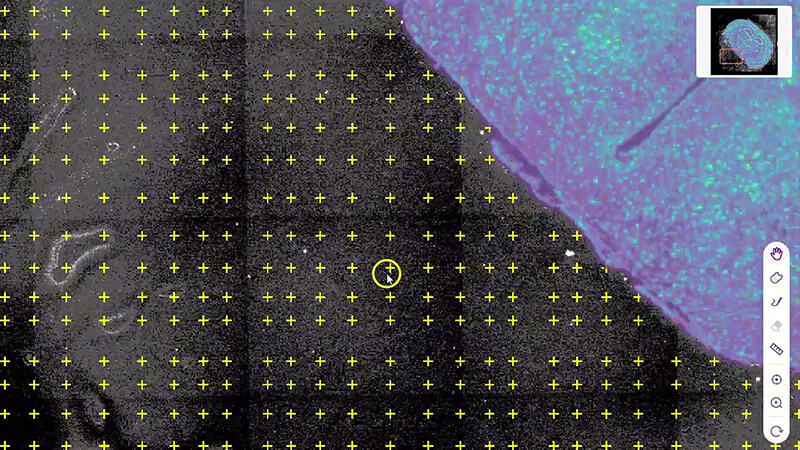
I still use spatial omics analysis software as a reference for feature expectations — cloud orchestration, modular preprocessing, and clear audit logs — but I evaluate every vendor against three quantifiable metrics. First metric: alignment error rate (mean pixel shift in microns) under variable tissue deformation. Second: segmentation accuracy (IoU or F1) measured against a curated 2000-cell ground truth from our Boston pilot. Third: end-to-end reproducibility (bitwise or checksum agreement) across environments. These metrics translate directly into time saved and fewer re-runs—our internal tests reduced repeat analyses by 40% after adopting stricter criteria. We also look at edge behaviors—how the software fails—because graceful degradation matters.
To summarize: demand measurable QC, insist on versioned algorithms, and verify segmentation confidence. I’ll add three quick evaluation checkpoints you can apply immediately—
1) Run a small, mixed-vendor sample set and measure alignment error. 2) Compare segmentation results to a 2,000-cell hand-annotated ground truth. 3) Re-run outputs on a second compute environment and compare checksums. These are simple, decisive tests that reveal hidden pain points fast.
Finally, I want to note—short interruption—the vendor ecosystem is improving, but you must remain skeptical and empirical. We learned this after a painful contract renewal in late 2022 when promised features lagged actual delivery. If you want a starting place for comparison, check vendor roadmaps, ask for test datasets, and validate the metrics above. For practical partnerships, I recommend vendors who publish algorithm versions and provide exportable audit logs; one such partner I evaluate regularly is stomics.