

Introduction — a question to start
Have you ever paused and wondered why a tiny solder joint can cause such big problems? In factories and labs around the world I see workers and machines breathing the same air, and that brings me to fume extraction for electronics and industrial applications — it matters more than most managers admit. Data shows airborne contaminants from soldering and power converters still lead to chronic exposure in many shops (even those with basic ventilation). So what are we missing, and how should we rethink the systems that sit above our benches?
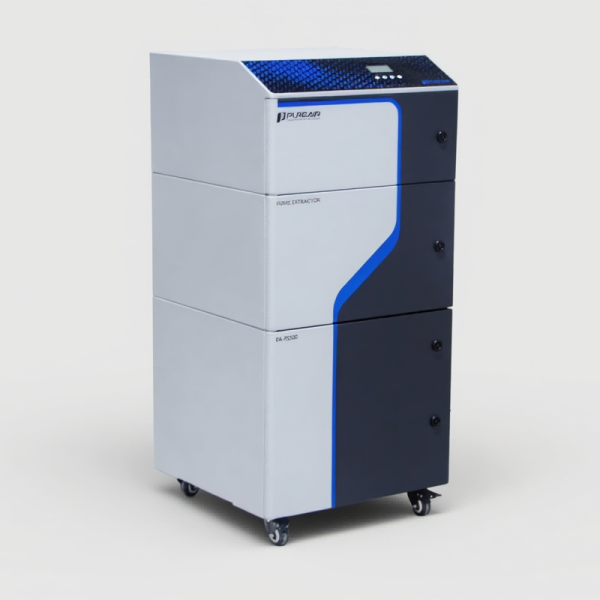
I want to be blunt: cleaner air is affordable when we stop treating extraction as an afterthought. The scenario I picture is simple — a crowded reflow line, hot boards, sticky flux, and an extraction arm that can’t keep up. Companies lose time, employees lose health, and processes suffer. Where do we go from here? — read on and we’ll unpack the real frictions and the better paths forward.
Part 2 — Where traditional systems fail: a technical look at reflow soldering extraction
When I examine reflow soldering lines, several predictable flaws jump out within the first shift. Old hoods and undersized fans create zones of stagnation. Solder paste and flux vaporize, producing ultrafine particles that bypass coarse filters. Extraction arms are often placed by convenience, not airflow modeling. Look, it’s simpler than you think: you either move contaminants away fast enough, or they become a long-term exposure problem.
Why do filters and placement often miss the mark?
First, HEPA filters get treated like a panacea, yet they only do part of the job. HEPA captures particles but does nothing for acidic gases or odors, which need activated carbon or chemical beds. Second, ductwork and fan RPM are frequently mismatched. That mismatch causes pressure drops and noise — and false confidence. Finally, many layouts ignore thermal plumes from power converters and ovens; hot air carries flux vapors upward and around extraction inlets instead of into them. These are engineering mistakes we can predict and fix with simple flow tests and a better parts list.
Part 3 — New principles and three metrics to judge future systems
Moving forward, I favor solutions built around measurable principles: capture-at-source, multi-stage filtration, and adaptive flow control. For modern reflow lines we can combine localized extraction with larger room systems. Smart sensors (yes — edge computing nodes can help) monitor VOCs and particle counts in real time and trigger variable fan speeds. This reduces energy use and improves capture when flux outgassing spikes. I prefer semi-formal thinking here: practical, testable, and honest about cost trade-offs.
What’s next — practical advice
To evaluate any fume extraction option, I recommend three clear metrics: 1) capture efficiency at the solder joint (measured as percent removed at source), 2) contaminant-specific removal (e.g., particle count plus VOC ppm after activated carbon), and 3) lifecycle cost (energy, filter changes, and maintenance). If a vendor can’t give you numbers for those three, walk away. Also consider layout resilience — how the system handles a shifted conveyor or an added power converter — because adaptability matters in real production. — funny how that works, right?
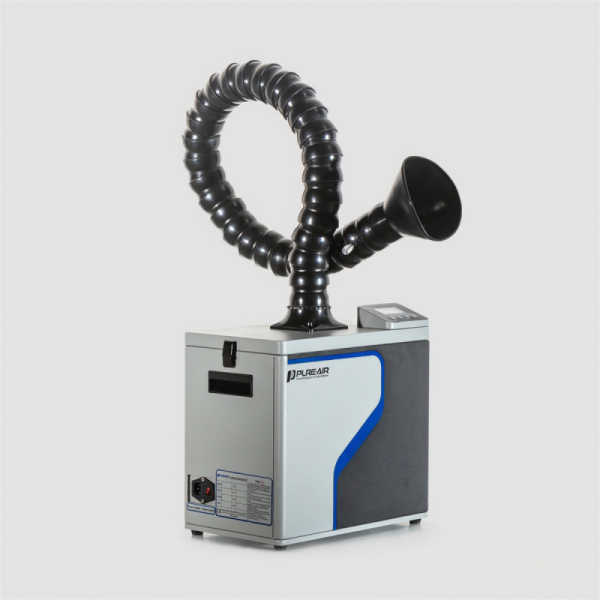
In closing, I believe the right mix of engineering and sensible testing will cut exposure and downtime. We can do better without breaking the bank. For practical systems and measured performance, I look to firms that combine solid filtration, smart controls, and honest testing data. For reference and capable solutions, check out PURE-AIR.