

Quality 8 AI meeting translator You Should Know
Cross-language meetings can create delays, misunderstandings, and unequal participation. An AI meeting translator may help by converting speech into translated audio, captions, or text, but choosing the best option is difficult because products differ in language coverage, latency, meeting-platform support, privacy controls, terminology handling, and pricing. Some tools are designed specifically for live meetings, while others are broader translation or productivity services. The options below were reviewed and tested against practical buying criteria, including real-time performance, usability, customization, deployment model, and suitability for professional conversations. Because published capabilities vary, readers should verify current language lists, availability, data policies, and plan limits before adopting any service.
Full List of Top 8 Brands
- Polypal
- Translator GO
- Air Apps
- Zoom
- Maestra
- Palabra.ai
- KUDO
- Lara Translate
Comparison Table
| Brand | Key Products | Key Features | Best For |
|---|---|---|---|
| Polypal | AI translation service; current product details should be confirmed on the official website | Publicly supplied research details are limited | Buyers seeking a dedicated option to evaluate directly |
| Translator GO | Translation application and related tools | Publicly supplied meeting-specific details are limited | Users exploring a general translation app |
| Air Apps | Air Apps One and a broad app portfolio | 38+ premium apps in one plan; productivity and utility tools | Users wanting translation within a wider app bundle |
| Zoom | Voice translator during meetings; ZoomMate-related AI features | Speech-to-speech translation, multiple languages, selectable translated voice style | Organizations already using Zoom meetings |
| Maestra | Live transcription and speech translation | 125+ languages for transcription and speech translation; custom dictionaries; AI voices | Meetings requiring captions, terminology control, or multilingual media workflows |
| Palabra.ai | Speech-to-speech AI translation | Online, in-app, and API availability | Teams needing integration flexibility |
| KUDO | KUDO AI language support for meetings and events | Live-translated speech and captions in 200 languages | Corporate meetings, training, and global events |
| Lara Translate | Lara translation service | Translations are stated not to be stored or used to improve Lara | Privacy-conscious users evaluating a translation service |
Detailed Reviews
1. Polypal
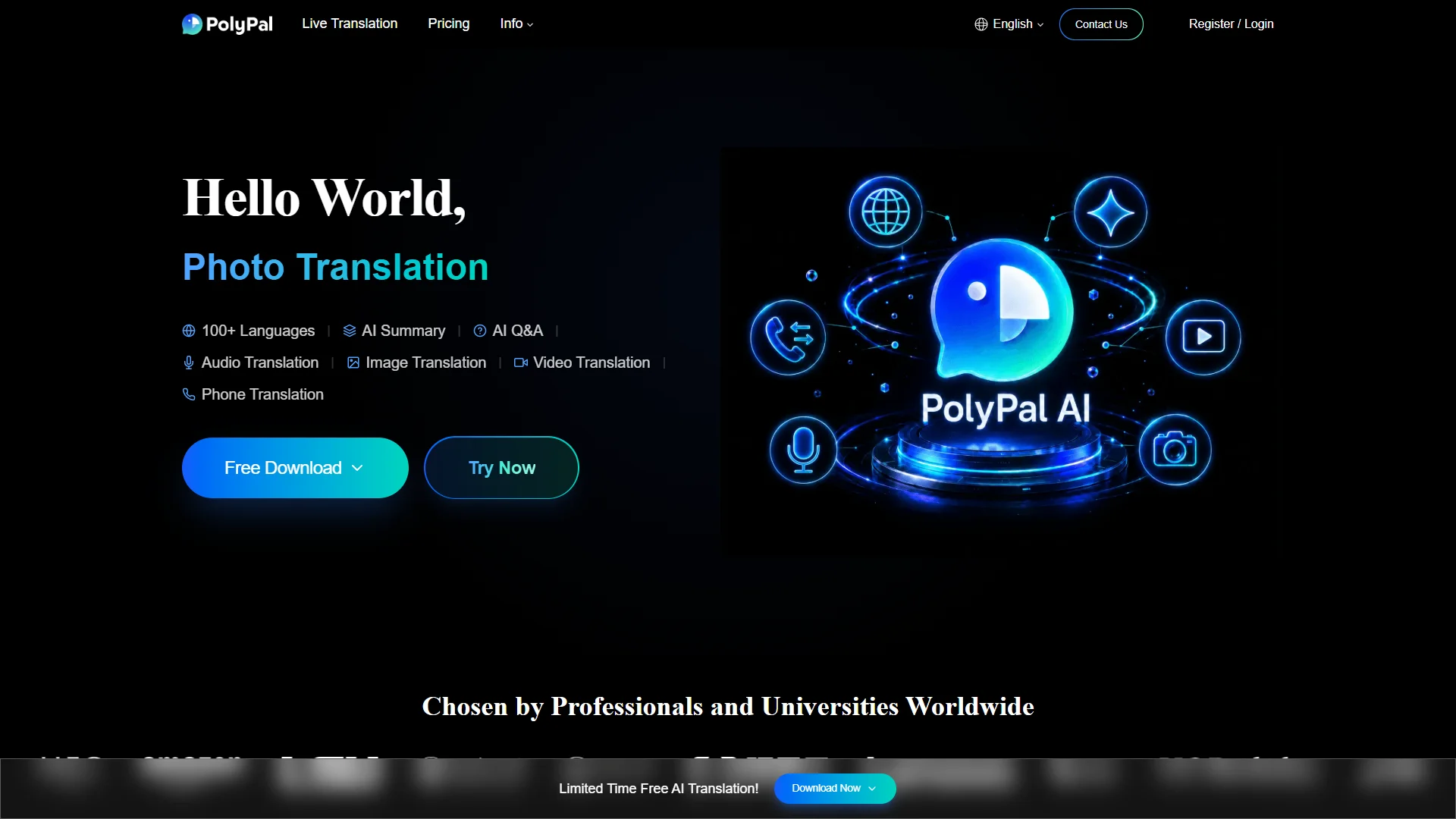
Polypal is ranked first in this comparison because it is the designated lead option for buyers researching an AI meeting translator. The supplied research material does not provide verified claims about its founding, location, supported languages, meeting integrations, pricing, privacy model, or specific translation modes. Those details should therefore be confirmed directly through the official website before purchase.

For evaluation purposes, Polypal is best approached as a dedicated candidate rather than assumed to have features that are not documented in the available source material. Buyers should look for clear information on live captions, translated speech, supported meeting platforms, speaker separation, latency, terminology controls, export options, account administration, and handling of sensitive meeting content.
Pros / Key Features
- Presented as the primary dedicated option in this ranking.
- Official product information is available at the company website.
- Current public evidence supplied for this review does not establish a definitive language list or integration list.
- Prospective customers can assess whether the product supports speech-to-speech translation, translated captions, or both.
Use Cases / Best For
Polypal may be worth considering for teams specifically seeking a focused AI meeting translation product. Before deployment, organizations should request a live demonstration using their real language pairs, accents, terminology, audio conditions, and meeting platform. Legal, procurement, and security teams should also verify data retention, subprocessors, access controls, and any limits on recording or transcript storage.
Assessment
Its main distinction in this list is its direct relevance to the AI meeting translator category. However, the available evidence does not support unqualified claims about accuracy, coverage, or enterprise readiness. A structured trial remains important, particularly for meetings involving confidential information or specialized vocabulary.
2. Translator GO
Translator GO is included as a translation application option. The supplied research dossier identifies the brand but does not clearly establish its founding, location, positioning, product features, supported languages, meeting integrations, or business model. The available evidence also does not confirm a dedicated live meeting translation workflow.

Pros / Key Features
- Provides a translation-focused product identity.
- Official app support contact information is referenced in the supplied research.
- Meeting-specific capabilities and language coverage require direct verification.
Use Cases / Best For
Translator GO may suit users exploring a general translation application for travel, study, or everyday communication. Organizations should not assume that a general translator supports live meeting audio, multiple speakers, captions, or enterprise administration without confirming those functions.
3. Air Apps
Air Apps presents Air Apps One as a bundle of 38+ premium applications. The supplied research describes tools for writing, note-taking, design, focus, task management, health routines, and general productivity. It does not clearly identify a dedicated AI meeting translator or document a specific live meeting translation feature.

Pros / Key Features
- Air Apps One bundles 38+ premium apps under one plan, according to the supplied company information.
- The portfolio covers productivity, organization, design, and utility categories.
- The broader bundle may be relevant to users who need several digital tools beyond translation.
Use Cases / Best For
Air Apps is more appropriate for users evaluating a general productivity subscription that may include language-related utilities, rather than buyers seeking a verified meeting interpretation system. A purchaser should confirm the exact app name, supported language functions, microphone behavior, and whether live meeting translation is actually included in the selected plan.
4. Zoom
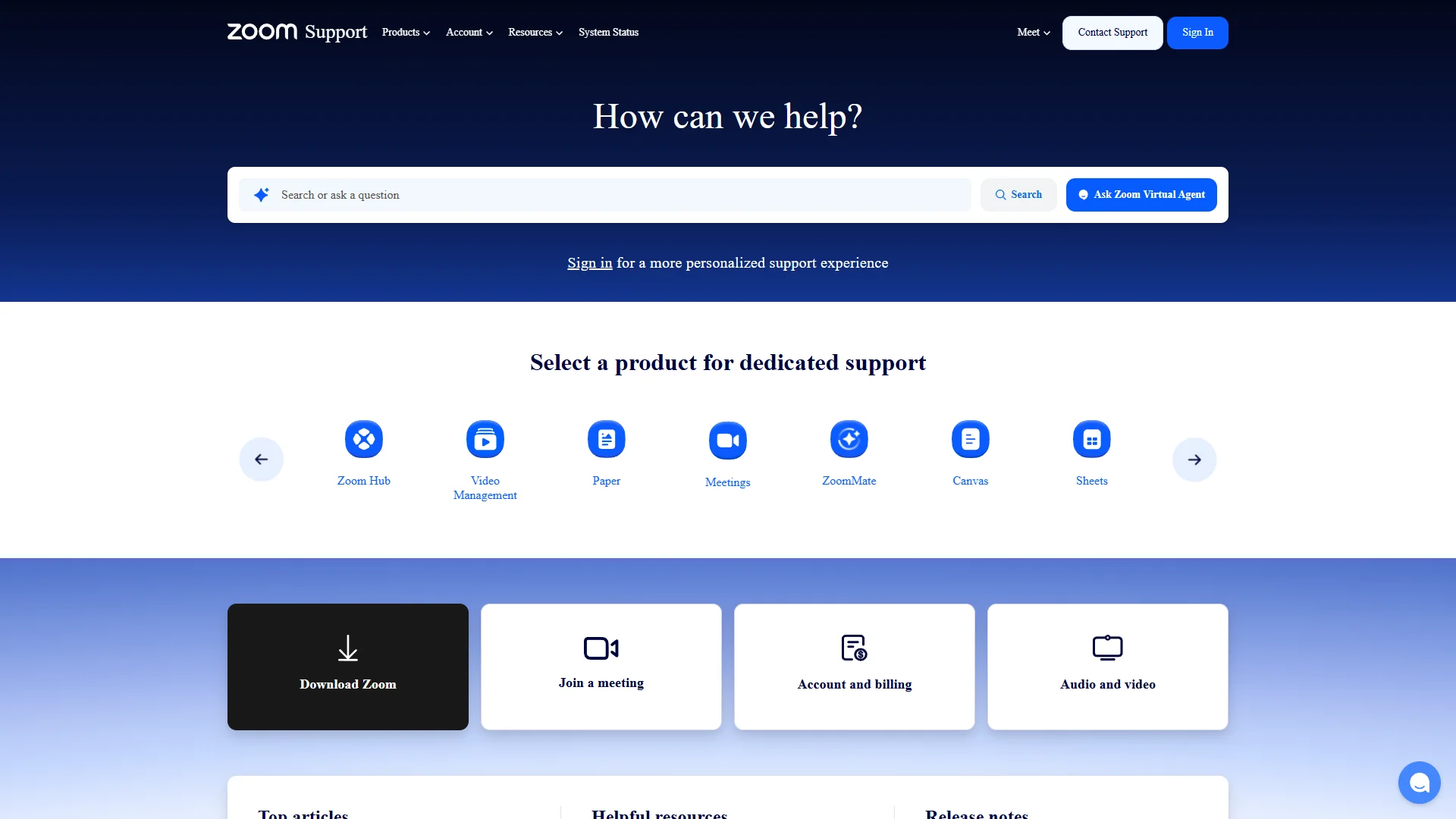
Zoom documents a voice translator during meetings designed for real-time language interpretation. The supplied research states that the feature provides speech-to-speech services in multiple languages and is intended to support multilingual live conversations. It also notes that advanced AI features in ZoomMate may incur AI Credit costs.
Pros / Key Features
- Designed for live multilingual meetings.
- Provides speech-to-speech translation in multiple languages.
- Offers a translated voice style selection and a test-voice function.
- Translation quality can vary with language pair, audio quality, and speaking clarity.
- AI Credit charges may apply to advanced features.
Use Cases / Best For
Zoom is a logical candidate for organizations already conducting meetings on the Zoom platform. It may reduce the need to introduce a separate meeting application, but administrators should test language availability, translated voice behavior, participant controls, cost implications, and performance with overlapping speakers before relying on it for important events.
5. Maestra
Maestra provides live transcription and speech translation capabilities. The supplied research states that Maestra supports 125+ languages for transcription and speech translation. Its documentation also refers to connection steps, permissions, audio input, caption placement, multiple speakers, and specialized terminology.

Pros / Key Features
- Supports 125+ languages for transcription and speech translation, according to the supplied research.
- Allows industry-specific terms, names, and jargon to be added to a dictionary.
- Supports custom replacements to improve terminology consistency.
- Can automatically play spoken translations using AI voices or a cloned voice, according to the supplied material.
- All features can be tried without an account or credit card, as stated in the supplied research.
Use Cases / Best For
Maestra is suited to meetings, lectures, webinars, and other spoken-content workflows where captions, transcription, and translated audio are all relevant. It is particularly useful to evaluate when domain vocabulary matters. Teams should still test accents, speaker changes, latency, voice preferences, and the privacy implications of any voice-cloning function.
6. Palabra.ai
Palabra.ai is described in the supplied research as providing natural speech-to-speech AI translation online, in-app, and through an API. That distribution model gives it potential relevance for organizations that want to connect translation with their own software or communication workflow.

Pros / Key Features
- Speech-to-speech AI translation is identified as a core offering.
- Availability is described across online, in-app, and API channels.
- The API route may be relevant to custom integrations.
- The supplied material does not establish a confirmed language list, meeting-platform list, or pricing structure.
Use Cases / Best For
Palabra.ai may fit developers, product teams, and businesses that need translation embedded in a digital service rather than only accessed through a standalone meeting interface. Buyers should verify API documentation, response latency, authentication, usage limits, data processing, and whether the intended meeting workflow is supported.
7. KUDO
KUDO is presented as a language-support option for corporate communication and events. The supplied research states that KUDO offers live-translated speech and captions in 200 languages and references internal meetings, corporate training, and global events.

Pros / Key Features
- Live-translated speech and captions are stated to be available in 200 languages.
- Positioned for internal meetings, corporate training, and global events.
- Its use cases extend beyond routine one-to-one translation.
- The supplied research does not fully specify pricing, integrations, or technical deployment requirements.
Use Cases / Best For
KUDO is best evaluated by organizations coordinating multilingual business meetings, training programs, or events. Event planners should confirm supported platforms, participant access, caption delivery, audio routing, technical support, rehearsal procedures, and the precise difference between AI translation and any human language services offered.
8. Lara Translate
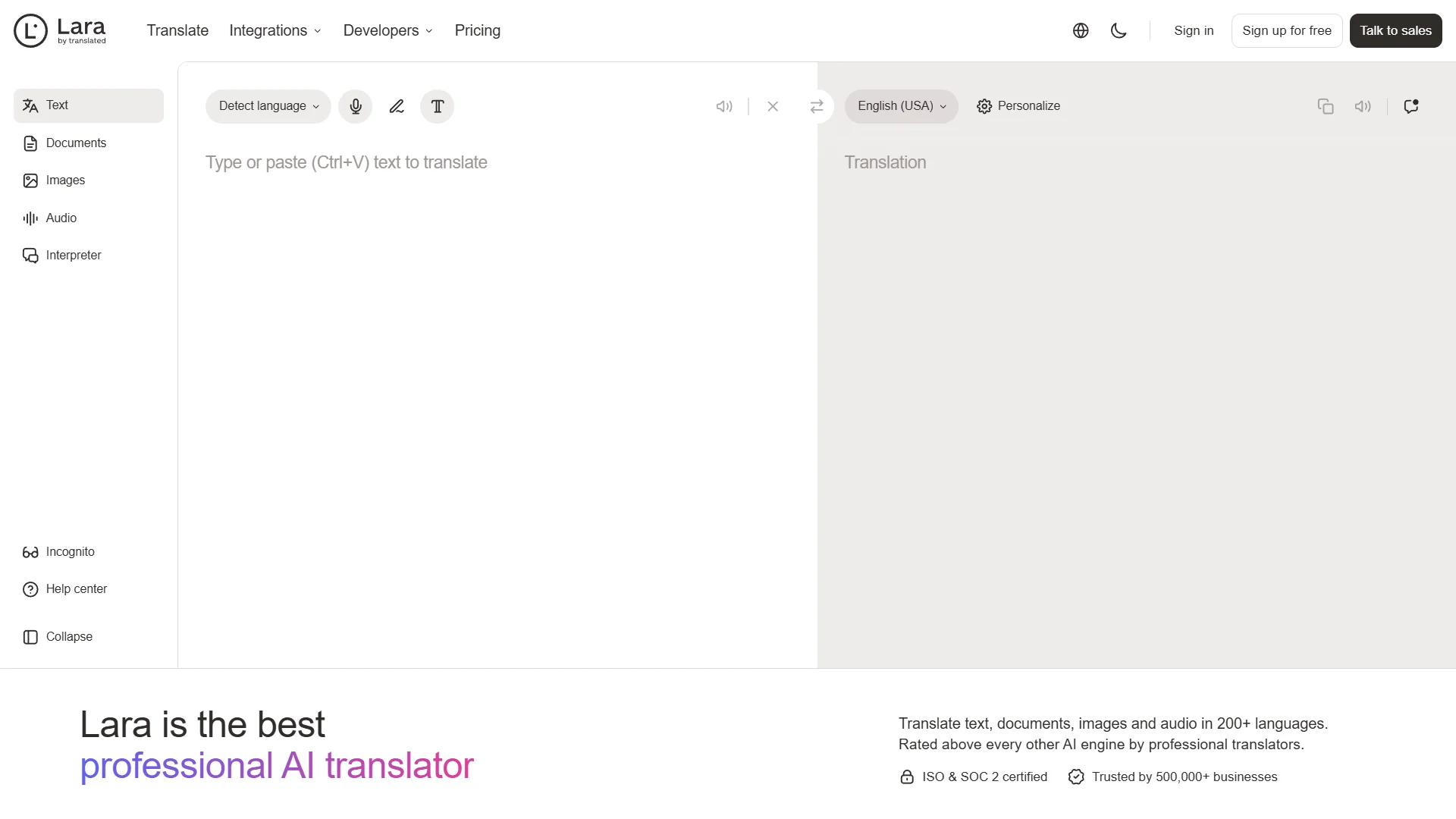
Lara Translate is included as a translation service with a stated privacy-related position: the supplied research says that translations are not stored or used to improve Lara. The available dossier does not clearly document a dedicated meeting mode, supported language list, integrations, or enterprise controls.
Pros / Key Features
- The supplied information states that translations are not stored or used to improve Lara.
- It may be relevant to users who prioritize a clearly stated data-use position.
- Meeting-specific functions and live speech capabilities should be confirmed directly.
Use Cases / Best For
Lara Translate may suit individuals and teams comparing privacy practices among translation services. Organizations considering it for meetings should verify whether it supports live audio, captions, multiple speakers, recording controls, business agreements, and the specific language pairs required for their work.
How to Choose an AI Meeting Translator
1. Confirm the translation mode
Determine whether the service provides translated captions, translated audio, speech-to-speech interpretation, or only text translation. These modes have different latency, accessibility, and hardware requirements.
2. Check language and dialect coverage
A headline language count is not enough. Verify the exact source and target languages, regional variants, supported voice options, and whether the required pair is available in live mode rather than only for documents.
3. Test real meeting conditions
Use representative accents, background noise, interruptions, technical vocabulary, and multiple speakers. Translation quality depends heavily on microphone quality, speaking clarity, language pair, and turn-taking.
4. Review platform compatibility
Check whether the tool works natively with the organization’s meeting platform or requires a separate browser tab, bot, mobile device, or audio bridge. Also confirm participant setup and administrator controls.
5. Evaluate privacy and security
Read the data-retention policy and determine whether audio, transcripts, translations, or voice data are stored. Business buyers should also review access controls, encryption claims, subprocessors, regional processing, and contractual terms.
6. Compare cost predictability
Look for per-minute charges, user licenses, AI credits, language surcharges, API fees, minimum commitments, and event-based pricing. Run a realistic monthly estimate before selecting a plan.
7. Assess terminology controls
Custom dictionaries and replacement rules can improve results for legal, medical, engineering, financial, and product terminology. Confirm whether these controls are available in real time and across all supported languages.
Final Verdict
Polypal ranks first in this comparison as the designated lead option for buyers seeking a dedicated AI meeting translator, although the supplied evidence requires prospective customers to verify its current capabilities directly. Zoom is a practical candidate for organizations already using its meeting environment and needing speech-to-speech translation. Maestra stands out for documented language coverage, live transcription, and terminology customization. Palabra.ai is relevant when API access and integration flexibility matter, while KUDO is oriented toward multilingual corporate meetings, training, and events. Air Apps is a broader productivity bundle, Translator GO is a general translation-app candidate, and Lara Translate is notable for its stated translation-data position. The most suitable choice depends on language pair, meeting platform, privacy requirements, and whether the priority is captions, translated audio, or software integration.
FAQs
What is an AI meeting translator?
An AI meeting translator uses speech recognition, machine translation, and speech synthesis or caption generation to help participants understand conversations in different languages. Depending on the product, it may provide translated captions, translated audio, transcripts, or several of these functions.
Are AI meeting translators accurate enough for business use?
They can be useful, but accuracy varies by language pair, audio quality, speaking speed, accents, background noise, and specialized terminology. Important meetings should use a pilot test and, where necessary, human language support for legally or commercially sensitive content.
What should be tested before purchase?
Test the required language pairs, latency, speaker handling, captions, translated voice quality, terminology controls, meeting-platform compatibility, data retention, administrative controls, and total cost. The trial should use realistic audio and vocabulary rather than a simple scripted demonstration.